The Great Decoupling: From Platform Extraction to Agentic Sovereignty

1. The Paradigm Shift: Understanding the Two Worlds
The global hospitality industry is undergoing a structural inversion, moving from a “Platform-Mediated” model toward an “Agent-Orchestrated” ecosystem. For decades, centralized aggregators like Airbnb and Booking.com have functioned as extractive gatekeepers, holding a monopoly over discovery and trust. Today, we are witnessing the rise of “Deep Hospitality,” where these intermediaries are bypassed by autonomous AI agents interacting via open protocols like Web MCP (Model Context Protocol). Value is migrating from centralized databases to distributed, sovereign nodes.
The Structural Shift: Value is migrating from centralized aggregators that control discovery and trust to a decentralized network where open protocols allow “Sovereign Hosts” to connect directly with travelers through machine-to-machine collaboration.
To grasp the urgency of this transition, one must first dismantle the mechanics of the friction inherent in the old way of doing things.
podcast
2. The Legacy Model: The “Below the Line” Commodity Trap
The current platform era is defined by the Manual Search Barrier. In this system, travelers spend hours navigating generic interfaces while algorithms manipulate visibility based on marketing budgets and promoted listings. For the rural host, this is a “commodity trap” where unique historical assets are treated as interchangeable service providers.
The legacy system is plagued by three primary structural inefficiencies:
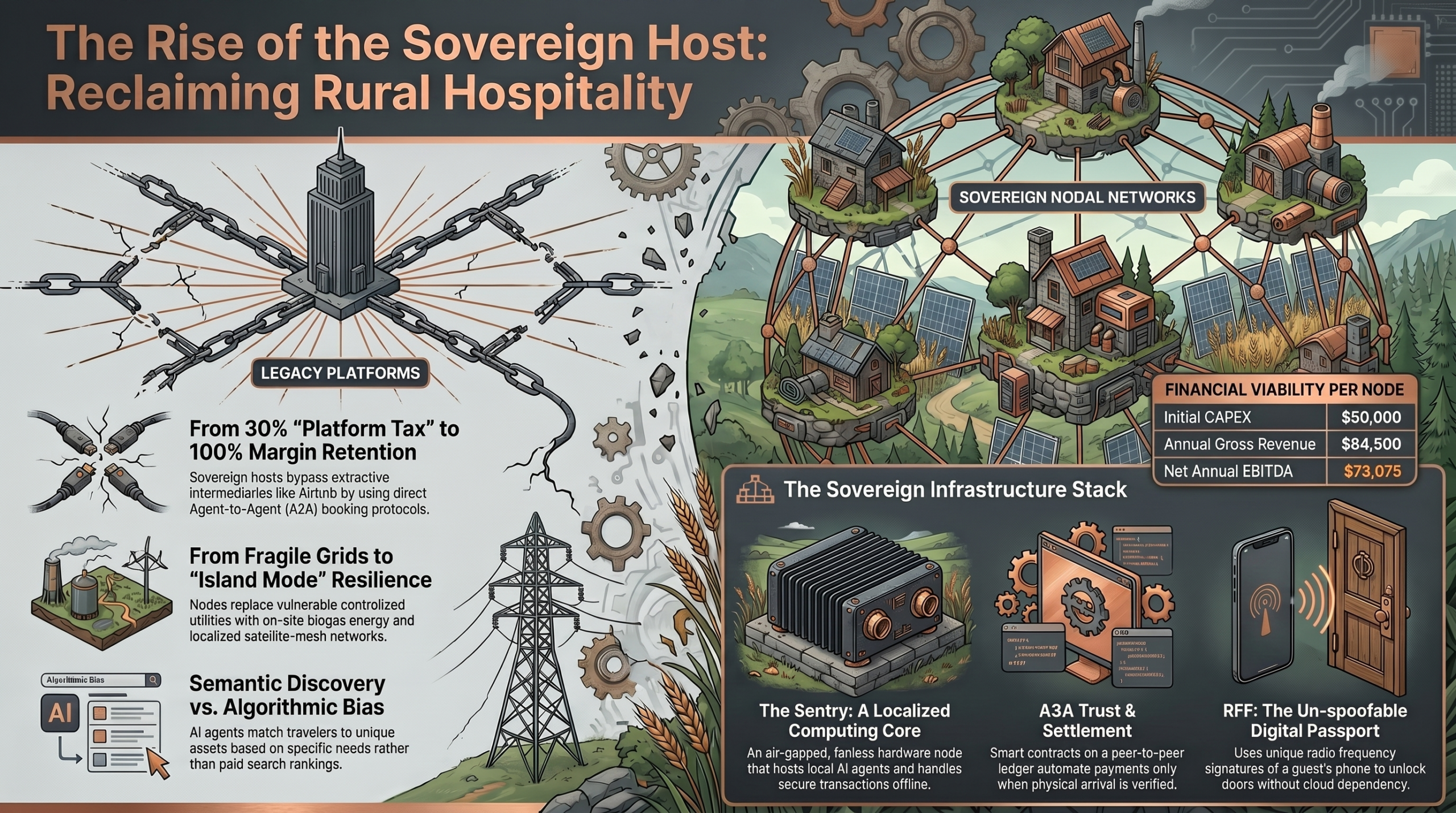
- The Platform Tax: Intermediaries extract 15–30% in commission fees from every transaction, draining capital out of the local rural economy to enrich remote urban centers.
- Algorithmic Censorship: Hosts are dependent on “black box” ranking systems; a single change in a platform’s search criteria can instantly render a business invisible.
- Data Dependency: Platforms own the guest relationship. By denying hosts access to their own customer data, platforms prevent the development of long-term sovereignty.
In this model, “average” luxury is a commodity, and the host is merely a tenant on a digital plantation. The remedy for these manual search frustrations lies not in a better interface, but in an agentic shift toward zero-friction discovery.
video
3. The Agentic Model: Zero-UI and Semantic Discovery
The agentic model introduces Agent-to-Agent (A2A) hospitality. Rather than a human scrolling through photos, a traveler’s personal AI agent (the Intention-side) negotiates directly with a property’s “Action-side” agent. This is “Zero-UI” discovery: agents match intent using Agent-Readable Manifests—structured digital blueprints containing semantic tags such as #acoustic-silence-90dB, #historical-mill-1840s, or #biogas-powered.
Legacy Search vs. Agentic Discovery
| Feature | Legacy Search (Platform) | Agentic Discovery (A2A) |
| User Action | Manual scrolling and photo review | Natural voice command / Intent statement |
| Discovery Mechanism | Keyword SEO & Marketing Budgets | Semantic matching via “Agent-Readable Manifests” |
| Gatekeeper | Centralized Aggregator (Airbnb/Expedia) | Open Protocols (Web MCP) |
| Trust Mechanism | Platform Review System | A3A Smart Contract Escrow |
| Discovery Cost | 15–30% Commission Fee | Zero-cost, Peer-to-Peer matching |
Through “Experience Logic,” the host no longer markets a lifestyle; they expose a machine-readable API. The traveler’s agent selects the property because its manifest mathematically matches the guest’s psychological and context-heavy requirements for silence, authenticity, or off-grid reliability. Once the traveler’s intent is matched semantically to the host’s asset, the focus shifts from the discovery of value to the sovereignty of the transaction.
video
4. The Economic Inversion: Reclaiming the 30%
By transitioning into a Sovereign Host, rural entrepreneurs bypass the platform tax, reclaiming a 20–35% margin increase. This economic inversion is powered by A3A (Agent-Web3-Agent) protocols, which automate financial settlement without centralized gatekeepers.
The Economic Trifecta of the Sovereign Host:
- Fee Recovery: Reclaiming the commission lost to aggregators, keeping travel dollars in the local economy.
- Data Sovereignty: The host retains the direct communication channel and the digital relationship with the guest.
- Identity Control: Hosts set their own “Rules of Engagement” encoded into their agent, immune to platform-enforced global refund policies.
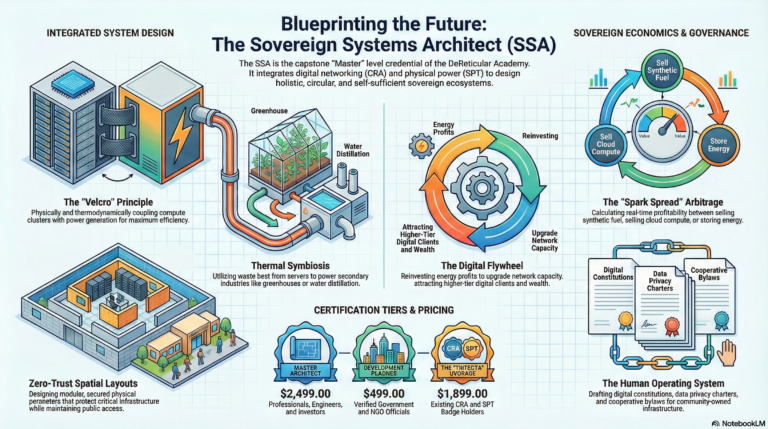
A $50,000 Sovereign Node generates revenue far beyond “heads in beds.” Leveraging the Agra Dot Energy system and the Sentry Pro compute core, the node generates income via:
- Compute Leasing: Renting local GPU/NPU cycles for AI inference and decentralized processing.
- Mesh Access: Selling high-speed local intranet subscriptions to neighboring properties.
- Energy Arbitrage: Optimizing the Spark Spread by selling surplus solar or biogas energy generated by the Agra Dot microgrid.
To overcome the initial CAPEX, sovereign developers utilize Node-as-a-Service (NaaS) and Revenue-Based Financing (RBF), alongside programmatic captures of USDA REAP grants and IRA Direct Pay, effectively subsidizing up to 50% of the hardware stack. Achieving this level of economic independence requires a technical bridge—a physical and digital architecture capable of standing on its own.
5. The Sovereign Stack: Web MCP and the Sentry Node
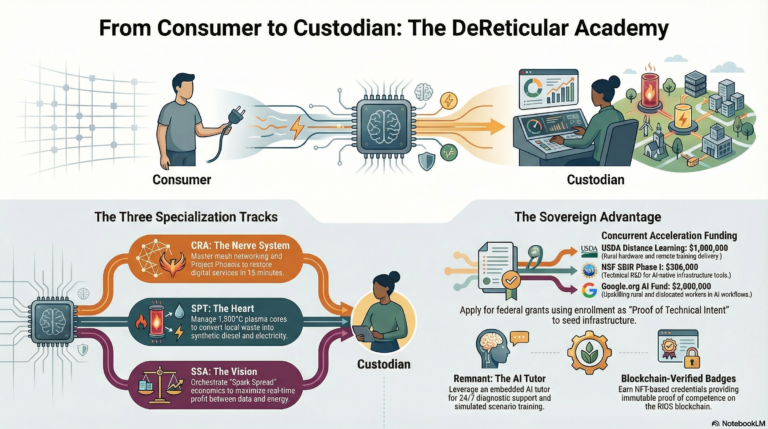
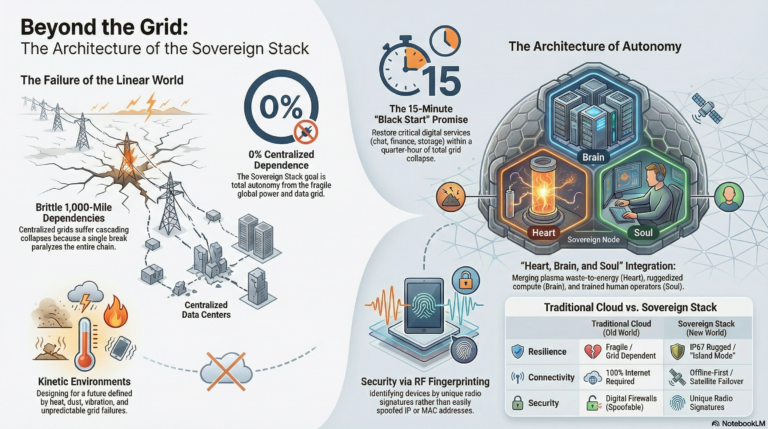
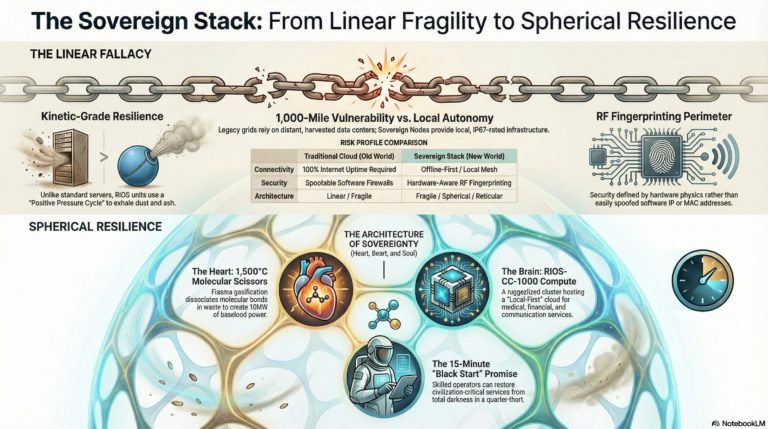
To move “Above the Line,” a host requires a technical architecture that is machine-legible and resilient. This stack allows a property to run in “Island Mode,” completely independent of centralized clouds or fragile national grids.
The Sovereign Infrastructure:
- The Hardware (Physical):
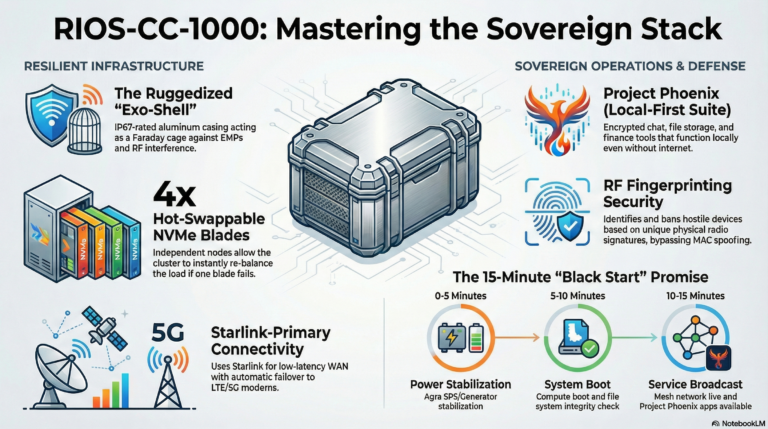
- DeReticular Sovereign Sentry Pro: A fanless, industrial HCI node hosting routing (pfSense), a local ledger (Locutus), and a sandbox for air-gapped AI.
- Nomad Mesh: RIOS-EXT-01 beacons projecting a miles-wide private intranet canopy using Wi-Fi 6E and LoRaWAN.
- The Logic (Digital):
- OpenClaw Agents: Local, air-gapped models that never leak data. This includes the DevOps Sovereign (Llama-3-8B) for self-healing server administration and the Field Medic (Mistral-7B) for predictive hardware diagnostics.
- The Trust (Financial):
- Locutus Ledger & A3A Protocols: A peer-to-peer settlement layer that handles smart contract escrows.
The host does not need a “user-friendly website” designed for humans; they need an agent-friendly API that exposes the node’s capabilities—availability, energy metrics, and “Experience Logic”—directly to the traveler’s AI. While the technical stack provides the visibility for the machine-readable web, the ultimate value remains anchored in the physical world, where the stack meets the soil.
6. Authenticity as “Above the Line” Luxury
“Above the Line” hospitality focuses on assets that Big Tech cannot commoditize: physical silence, biological context, and non-reproducible local history. Rural America possesses a structural advantage here that Silicon Valley cannot duplicate.
The Nodal Moat: The Nodal Moat is built on the convergence of unique physical assets (an 1840s mill, a scenic historical ridge) and “Physics over QR Codes” security. By using Radio Frequency Fingerprinting (RFF) to verify a guest’s identity through the unique electromagnetic signature of their phone antenna, the host provides a level of privacy and security that legacy platforms cannot match. Physical silence becomes the ultimate high-value amenity.
As AI saturates daily life, high-net-worth travelers will seek “low-cognitive-load” environments. In the agentic era, a unique cottage in rural Kentucky is semantically “equal” to a Hyatt suite if it fits the traveler’s specific intent for silence and off-grid sovereignty.
7. Summary Comparison & Learner’s Checklist
The transition from consumer to sovereign developer is the path to technical and financial independence.
The Sovereign Transition Checklist
| Dimension | Current State (Platform) | Future State (Sovereign) |
| Discovery | Manual Search / SEO | Semantic Agentic Discovery (Web MCP) |
| Fees | 15–30% Extraction | 100% Margin Retention |
| Data | Owned by Platform | Owned by the Sovereign Host |
| Power / Internet | Centralized Grid (Fragile) | “Island Mode” (Agra Dot / Nomad Mesh) |
| Trust Mechanism | Platform Review System | A3A Smart Contract Escrow |
| Security | Digital QR Codes / Passwords | Physics-based RFF Fingerprinting |
The future of the rural entrepreneur is to evolve from being a consumer of platform interfaces to being a sovereign developer of their own value. By deploying the sovereign stack, you transform your land into a resilient, self-financing destination—an anchor of the sovereign frontier.