Strategic Regulatory Compliance Roadmap: Multi-Jurisdictional Autonomous Emergency Transit & Biophysical Infrastructure
- Executive Regulatory Context & Compliance Architecture
1.1 The Multi-Jurisdictional Emergency Transit Catch-22
The operational deployment of autonomous emergency transport systems introduces a fundamental legal and cryptographic conflict between federal health data privacy mandates and municipal public safety traffic management. Under the Health Insurance Portability and Accountability Act (HIPAA), covered entities and their business associates are constrained by the Minimum Necessary Standard (45 CFR § 164.502(b)) and Transmission Security requirements (45 CFR § 164.312(e)). Transmitting unencrypted or broadly accessible patient telemetry—such as real-time 1 kHz 12-lead EKG streams, arterial pressure lines, or diagnostic codes—over public radio frequency (RF) channels violates federal privacy law.
Furthermore, broadcasting de-identified spatial-temporal coordinates (e.g., precise GPS trajectories coupled with emergency response metadata) creates re-identifying quasi-identifiers under 45 CFR § 164.514(b)(2). Because municipal traffic control centers, smart-city roadside units (RSUs), and civilian connected vehicles do not qualify for the Treatment Exception defined in 45 CFR § 164.506(c)(1), transmitting such spatial-temporal telemetry to civilian infrastructure constitutes an illegal disclosure of Protected Health Information (PHI).
Conversely, resolving this privacy constraint by utilizing legacy, unauthenticated emergency preemption mechanisms introduces catastrophic physical safety risks. Traditional preemption technologies—such as optical strobe emitters (e.g., Opticom) or unauthenticated National Transportation Communications for ITS Protocol (NTCIP) 1211 wireless signals—lack cryptographic origin attestation and replay defense. Deploying unauthenticated preemption beacons on autonomous vehicles enables civilian Sybil attacks (falsifying multiple emergency identities) and meaconing/replay attacks (recording and rebroadcasting valid preemption requests to force unauthorized green waves). Autonomous transit infrastructure is therefore trapped in a regulatory Catch-22: disclosing telemetry to secure municipal traffic priority violates HIPAA, whereas withholding telemetry or using unauthenticated broadcasts compromises public safety and invites malicious traffic manipulation.
Regulatory Conflict Governing Mandate Statutory Barrier Architectural Impact
Telemetry Disclosure vs. Infrastructure Preemption 45 CFR § 164.502(b)
45 CFR § 164.312(e) Prohibits transmitting unencrypted PHI or quasi-identifiable spatial-temporal data to non-treatment municipal infrastructure. Vehicles cannot broadcast raw clinical vitals or identity payload to traffic controllers to justify signal preemption.
Quasi-Identifier Broadcast vs. Civilian Interoperability 45 CFR § 164.514(b)(2) Spatial-temporal GPS tracks linked to emergency status constitute re-identifiable PHI without a § 164.506(c)(1) exception. Vehicle-to-Everything (V2X) spatial broadcasts to civilian cars invite HIPAA liability unless cryptographically isolated.
Unauthenticated Priority vs. Physical Cyber-Safety NTCIP 1211
NEMA TS2-2016 Legacy preemption protocols lack cryptographic signatures, permitting Sybil spoofing and signal replay attacks. Autonomous vehicles using legacy strobes/beacons risk severe traffic disruption from civilian radio manipulation.
Smart-Contract Execution vs. Federal BAA Framework 45 CFR § 164.502(e)
45 CFR § 164.504(e) Automated smart contracts on decentralized ledgers lack explicit, traditional HHS OCR BAA safe-harbor codification. Requires a dual-track implementation combining written legal BAAs with hardware-bound smart contracts during transitional epochs.
1.2 Statutory & Standards Baseline Matrix
The execution of multi-jurisdictional autonomous emergency transport across the 2026–2036 operational epoch requires strict compliance with an array of statutory rules, federal guidelines, standards, and institutional codes spanning the medical, vehicular, cryptographic, financial, and municipal domains.
Standard Identifier Regulatory Body / Issuing Organization Baseline Rule / Statutory Citation Applied Domain within DeReticular / RELA Sovereign Architecture
HIPAA Privacy & Security Rules HHS Office for Civil Rights (OCR) 45 CFR Parts 160 & 164 (Nov. 2026 Privacy Final Rule; Jan. 2025 Security NPRM) Cryptographic casing of patient telemetry, Digital Cased Medical Directives (DCMDs), and Automated BAAs.
FDA Section 524B / QMSR U.S. Food & Drug Administration (FDA) FD&C Act § 524B; 21 CFR Part 820 (QMSR); IEC 81001-5-1 / IEC 62304 Cybersecurity of medical devices, KurbKar-Med Clinical Care Capsules, smart infusion pump interlocks, and eSTAR submissions.
Wyoming DUNA Act State of Wyoming Legislature W.S. 17-32-101 et seq. (effective July 1, 2024) Legal personality, limited liability, and governance for regional NEMT Paratransit Cooperatives and Hospital Exergy Pools.
NIST FIPS 203 / SP 800-227 National Institute of Standards & Technology (NIST) FIPS 203 (ML-KEM); NIST SP 800-227 (KDM Combiner) Post-quantum hybrid key encapsulation (T_{\text{core}}) combining classical X25519/ElGamal with lattice-based ML-KEM-768/1024.
IETF RFC 9180 Internet Engineering Task Force (IETF) RFC 9180 (Hybrid Public Key Encryption – HPKE) Standardized encapsulation framework for hybrid post-quantum key derivation and payload encryption across edge nodes.
IEEE 802.15.4z IEEE Standards Association IEEE 802.15.4z-2020 (HRP-UWB STS) Asymmetric Double-Sided Two-Way Ranging (DS-TWR) Proof of Proximity (PoP) for bedside pumps and vehicle docking latches.
IEEE 1588-2019 IEEE Standards Association IEEE 1588-2019 (White Rabbit / High Accuracy Profile) Sub-nanosecond (\le 1.5\text{ ns}) inter-anchor clock synchronization for terrestrial Time Difference of Arrival (TDoA) Proof of Location (PoL).
SAE J2735 / J2945/B SAE International SAE J2735_202409 / J2945/B_202511 Signal Request Messages (SRM) and Signal Status Messages (SSM) over 5.9 GHz C-V2X PC5 Mode 4 interfaces.
NEMA TS2-2016 National Electrical Manufacturers Association NEMA TS2-2016 v03.07 Physical and electrical interfacing of drop-in RISC-V verification cards with municipal traffic cabinets and MMUs.
AABB 35th Edition Association for the Advancement of Blood & Biologics AABB Standards for Blood Banks, 35th Ed. (2026); 21 CFR 640 Cold-chain thermal preservation (1.0^\circ\text{C}\text{–}6.0^\circ\text{C}) and degree-minute integration for blood products in transit.
OPTN/UNOS Standards Organ Procurement and Transplantation Network OPTN/UNOS Preservation Guidelines Thermal and mechanical profiling for organ transport across Static Cold Storage (SCS), Hypothermic (HMP), and Normothermic (NMP) regimes.
49 CFR § 38.23 Federal Transit Administration / USDOT 49 CFR § 38.23(b)(1); FMVSS 403/404 Structural load thresholds and Lean 4 verification rules for non-emergency medical transit (NEMT) ramps and lifts (272 kg to 454 kg tiers).
IRC § 6417 / § 48E Internal Revenue Service (IRS) / U.S. Treasury Pub. L. 119-21 (July 4, 2025); 26 U.S.C. § 6417 Direct-pay tax monetization for clean energy microgrids, standalone energy storage, and 2026+ Domestic Content tracking.
FAR Part 31 / DCAA SF 1408 Federal Acquisition Regulation System FAR 31.201; DCAA Standard Form 1408 Financial accounting, allowable cost segregation, and auditing for federal infrastructure grants (e.g., FEMA BRIC).
- HIPAA Privacy & Security Compliance Engine (45 CFR Parts 160 & 164)
2.1 Digital Cased Medical Directives (DCMDs) & Breach Safe Harbor (§ 164.402)
The architecture resolves the HIPAA emergency transport Catch-22 by formalizing the cryptographic construction of Digital Cased Medical Directives (DCMDs). The DCMD adapts the historical Old Babylonian Cased Tablet pattern (ca. 2000–1600 BCE)—wherein sensitive economic text was inscribed on an inner clay tablet and sealed within an unbaked outer clay envelope containing only public verification summaries. In the DCMD paradigm, sensitive clinical telemetry is sealed within an encrypted inner core while broadcasting an unencrypted zero-knowledge outer envelope to civilian and municipal infrastructure.
Structural Cryptographic Architecture of the DCMD
- Outer Envelope (T_{\text{env}}): Designed for public broadcast over edge RF links and C-V2X interfaces.
- Payload Size: Compact, fixed \sim 192\text{–}256\text{-byte} size.
- Proof Construction: Groth16 zk-SNARK proof (\pi) compiled over BN254 or BLS12-381 elliptic curves.
- Public Signals: Verifies public triage predicates (e.g., \text{MAP} < 65\text{ mmHg} \lor \text{GCS} \le 8 \lor \Delta\text{ST} > 2\text{ mm}) without revealing raw vitals.
- Anti-Replay Mechanism: Includes an in-circuit hardware nullifier (\mathcal{N} = \text{Poseidon2}(S_{\text{TPM}}, \text{Epoch}_T, \text{Counter})) bound to the silicon root of trust.
- Cryptographic Commitment: A Poseidon2 state commitment (H_{\text{core}} = \text{Poseidon2}(\mathbf{V}{\text{state}} \parallel \text{salt})) cryptographically binds the state parameters verified in T{\text{env}} directly to the encrypted contents inside T_{\text{core}}.
- Inner Core (T_{\text{core}}): Designed for confidential transit to destination trauma centers.
- Tier 1 (DEM): Bulk symmetric payload encryption via AES-256-GCM (or ChaCha20-Poly1305 on non-AES RISC-V cores) protecting raw 1 kHz EKG waveforms, arterial line tracings, full diagnostic codes, and patient identifiers.
- Tier 2 (KEM): Ephemeral Data Encryption Key (K_{\text{DEK}}) wrapped via Three-Tier Hybrid Post-Quantum HPKE (IETF RFC 9180), fusing classical X25519/ElGamal key exchanges with lattice-based ML-KEM-768/1024 (NIST FIPS 203) using an HKDF-SHA256 Key Derivation Mechanism (NIST SP 800-227).
- Tier 3 (Accumulator): Additively homomorphic Paillier or Exponential ElGamal encryption restricted strictly to 32-bit scalar running totals (e.g., cumulative drug dosing, running mean arterial pressure sums).
Step-by-Step Cryptographic Lifecycle Breakdown
- Stage 1: Local Telemetry Ingestion & DEM Encryption
High-bandwidth biophysical telemetry—including 1 kHz 12-lead EKG waveforms, arterial line pressure dynamics, full diagnostic codes, and identity identifiers—is ingested inside the KurbKar-Med Clinical Care Capsule. The raw payload (M) is encrypted using an ephemeral 256-bit Data Encryption Key (K_{\text{DEK}}) via a symmetric Data Encapsulation Mechanism (DEM) adhering to AES-256-GCM. This bounds ciphertext expansion to 1.0\times |M| + 28\text{ bytes} (incorporating a 12-byte initialization vector and a 16-byte authentication tag). - Stage 2: Hybrid Post-Quantum Key Encapsulation (KEM)
The ephemeral key K_{\text{DEK}} is encapsulated inside the Inner Core (T_{\text{core}}) using a Three-Tier Hybrid KEM compliant with IETF RFC 9180 (HPKE), NIST FIPS 203, and NIST SP 800-227:- Classical Component: An m-of-n Threshold ElGamal or ECDH (X25519) key exchange keying K_{\text{DEK}} to the destination trauma hospital’s receiving consensus pool.
- Post-Quantum Component: ML-KEM-768 (or ML-KEM-1024 for high-assurance corridors) lattice key encapsulation.
- Key Derivation: A NIST SP 800-227-compliant HKDF-SHA256 Key Derivation Mechanism fuses classical (S_{\text{trad}}) and post-quantum (S_{\text{PQ}}) shared secrets into the final encapsulation wrapper.
- Stage 3: Zero-Knowledge Outer Envelope Generation (T_{\text{env}})
To justify municipal traffic signal preemption without disclosing PHI, an edge graphics processing unit (GPU) skid (e.g., RIOS-CC-1000) generates a succinct zero-knowledge proof (\pi) compiled via a Groth16 or PLONK zero-knowledge Succinct Non-Interactive Argument of Knowledge (zk-SNARK) circuit. The proof verifies public triage predicates: \text{MAP} < 65\text{ mmHg} \lor \text{GCS} \le 8 \lor \Delta\text{ST} > 2\text{ mm} The Outer Envelope (T_{\text{env}}) broadcasts strictly the \sim 192\text{–}256\text{-byte} proof \pi, Poseidon2 state commitments, and an in-circuit hardware nullifier to municipal roadside units and surrounding vehicles. - Stage 4: Verification & Safe Harbor Execution
Municipal traffic cabinets (NEMA TS2) and civilian vehicles verify \pi in <2\text{ ms} using 3 pairing equations over BN254 or BLS12-381 elliptic curves. Because T_{\text{env}} reveals zero bytes of PHI, un-hashed quasi-identifiers, or patient identity, the broadcast mathematically satisfies the Minimum Necessary Standard under 45 CFR § 164.502(b). Furthermore, because T_{\text{core}} is encrypted using NIST-compliant post-quantum algorithms, it constitutes unusable, unreadable, or indecipherable data under HHS OCR guidance, granting absolute Breach Safe Harbor protection pursuant to 45 CFR § 164.402 in the event of wireless packet interception.
Cryptographic Sizing & Parameter Allocation Matrix
- DEM Payload Cipher: AES-256-GCM / ChaCha20-Poly1305; ciphertext size: |M| + 28\text{ bytes}.
- Hybrid KEM Public Key Size: 1,216\text{ bytes} (X25519 32\text{ B} + ML-KEM-768 1,184\text{ B}); pre-positioned out-of-band across 1.5\text{ km} hospital geofences.
- Hybrid KEM Ciphertext Size: 1,120\text{ bytes} (X25519 32\text{ B} + ML-KEM-768 1,088\text{ B}); transmitted over local directional high-gain MIMO RF.
- Outer Envelope Proof Size (\pi): \sim 192\text{–}256\text{ bytes} (Groth16 over BN254); broadcast per-hop over 5.9 GHz C-V2X PC5 links.
- In-Circuit State Commitment: 32-byte Poseidon2 hash field element (\sim 300\text{ R1CS} constraints).
2.2 Automated Smart-Contract BAAs (§ 164.502(e)) & TPM 2.0 Identity Binding
Under 45 CFR § 164.502(e) and § 164.504(e), covered entities must execute Business Associate Agreements (BAAs) with third-party entities that process, store, or transmit PHI. In a decentralized, autonomous transport mesh, human-executed paper contracts introduce prohibitive administrative latency. The architecture resolves this by implementing Automated Business Associate Execution Nodes operating on Layer 5 smart-contract networks, bound directly to silicon roots of trust.
Hardware-to-Ledger Attestation Pathways
Every autonomous transit unit (KurbKar-Med), clinical edge skid, and municipal verification node is provisioned with a dedicated Hardware Trusted Platform Module (TPM 2.0) cryptographically bound to its physical motherboard. Cryptographic identity is established via an Endorsement Key (EK) injected during factory provisioning, producing TPM 2.0 Attestation Quotes across Platform Configuration Registers (PCRs 0–7) that measure the bootloader, kernel, Lean 4 Abstract Syntax Tree (AST) verifiers, and application binary integrity.
To maintain anonymity while preventing Sybil attacks and proof replay, the TPM 2.0 module generates Poseidon2 nullifiers:
\mathcal{N} = \text{Poseidon2}(S_{\text{TPM}}, \text{Epoch}_T, \text{Counter})
where S_{\text{TPM}} is a private secret sealed inside TPM NVRAM, \text{Epoch}_T represents a coarse 1-hour time epoch, and \text{Counter} tracks individual preemption requests. The nullifier \mathcal{N} is bound inside the zero-knowledge circuit as a public input. Municipal verification cards maintain a sliding-window BFT nullifier cache; any preemption request presenting a previously spent or algebraically re-randomized nullifier is rejected instantly, defeating Groth16 proof malleability attacks.
Verifiable Compliance Guarantees Provided by TPM-Attested Nodes
- Automated BAA Execution: Upon entering a regional health transit corridor, the vehicle’s TPM 2.0 module signs a cryptographic handshake with the health authority’s smart contract. The contract verifies the TPM quote, validates the node’s software integrity state, and executes an automated, legally binding BAA instance on-chain under 45 CFR § 164.502(e).
- Immutable Audit Logging: All DCMD verification events, signal preemption requests, and biophysical state transitions produce cryptographic receipts appended to an immutable BFT ledger (Level 2 Source of Truth). The ledger stores Poseidon2 nullifiers and proof attestations, enabling real-time compliance auditing by HHS OCR without storing raw PHI.
- Hardware-Enforced Deprovisioning: If a node’s TPM PCR state reflects unauthorized software modification, binary tampering, or a failed Lean 4 AST check, its attestation key is revoked on-chain. The smart contract terminates the node’s BAA execution clearance and purges its local ephemeral KEM decryption buffer.
2.3 Regulatory Transition Strategy for the 2026–2028 HIPAA Window
The operationalization of autonomous emergency transit coincides with a major regulatory transition across HHS OCR compliance frameworks. Navigating this window requires a dual-track implementation model to guarantee statutory compliance prior to formal administrative codification of zero-knowledge smart-contract BAAs.
Chronological Compliance Decision Timeline
- Phase 1: Promulgation & System Preparation (November 2026 – January 2027)
- Regulatory Benchmark: HHS OCR issued the HIPAA Privacy Rule Final Rule on November 16–19, 2026 (effective January 18–19, 2027), expanding permitted PHI disclosures for care coordination and case management. Concurrently, final administrative action on the January 2025 HIPAA Security Rule NPRM (eliminating the “addressable vs. required” distinction and mandating universal encryption, multi-factor authentication, and zero-trust network segmentation) was deferred to July 2027.
- Operational Directive: All edge infrastructure nodes must update cryptographic suites to hybrid post-quantum schemas (NIST FIPS 203) to satisfy anticipated Security Rule encryption mandates.
- Phase 2: Dual-Track Operational Compliance (July 2027 – January 2028)
- Regulatory Benchmark: Primary operational compliance deadline for the 2026 Privacy Rule Final Rule takes effect July 17–19, 2027.
- Legal Requirement: Because HHS OCR has not formally issued an administrative ruling confirming that Groth16 zero-knowledge tokens and smart-contract execution nodes satisfy BAA requirements per se, single-track smart-contract operation risks administrative civil money penalties.
- Mandatory Dual-Track Directive: All Epoch 1 and Epoch 2 transit consortia must execute conventional written legal BAAs (45 CFR § 164.504(e)) between regional EMS operators, municipal transit authorities, and cloud/edge infrastructure providers, backed by institutional review board (IRB) and health system Privacy Officer sign-offs. Concurrently, nodes must execute automated smart-contract logging in shadow mode to accumulate empirical compliance data for OCR petitioning.
- Phase 3: Final Regulatory Alignment & BAA Grace Period Expiration (January 2028 Onward)
- Regulatory Benchmark: The standard 180-day BAA transition relief window under the Privacy Rule Final Rule expires on January 18, 2028.
- Operational Directive: Transition all pilot corridors to fully automated TPM 2.0-bound smart-contract BAA execution engines, submitting compiled shadow audit logs to HHS OCR to secure formal administrative advisory opinions.
- FDA Section 524B & Quality Management System Regulation (QMSR) Integration
3.1 Cyber Device Classification & Secure Product Development Framework (SPDF)
Under Section 524B of the Federal Food, Drug, and Cosmetic (FD&C) Act (21 U.S.C. § 360bc) and the FDA Final Premarket Cybersecurity Guidance (issued February 3, 2026, aligned with 21 CFR Part 820 Quality Management System Regulation [QMSR]), clinical systems integrated into autonomous emergency transit platforms are legally classified as Cyber Devices.
This classification encompasses the KurbKar-Med transit platform, smart bedside/ambient infusion pumps, clinical telemetry gateways, and automated biophysical veto registers. Entities developing or operating these systems must enforce a comprehensive Secure Product Development Framework (SPDF) aligned with IEC 81001-5-1 and IEC 62304 standards.
Core eSTAR Documentation Artifacts for Premarket Submissions
- Machine-Readable Software Bill of Materials (SBOM): Continuous generation of SBOMs in CycloneDX or SPDX formats, mapping all software components, third-party libraries, Lean 4 AST kernel versions, and microcode binaries, cross-referenced against the National Vulnerability Database (NVD) for real-time CVE tracking.
- eSTAR Cyber Threat Modeling & Traceability Matrix: Formally structured threat models (STRIDE/HECVAT) embedded in the FDA eSTAR submission template, mapping biophysical attack vectors (e.g., UWB pulse injection, optocoupler blinding, CAN-FD bus flooding) to verifiable hardware/software mitigations.
- Formal Verification Traceability Logs: Lean 4 AST typechecking verification proofs confirming that algorithmic clinical contraindication modules (e.g., verifying renal clearance before automated infusion) preserve semantic truth (\Gamma \vdash \psi \implies \Gamma \models \psi) without software runtime exceptions.
- Postmarket Management Plan & Over-the-Air (OTA) Patch Architecture: Documented procedures for secure, authenticated firmware distribution via physical stationary docking airlocks, defining strict vulnerability disclosure, triage, and patch deployment windows (\le 30\text{ days} for critical CVEs).
3.2 Two-Stage Phased Clinical Deployment Strategy
A major entry barrier for autonomous medical transit hardware is that installing aftermarket hardware controllers or direct drive-by-wire interlocks onto existing hospital equipment voids original OEM 510(k) FDA clearances. To overcome this statutory barrier, deployment is structured into a two-stage rollout strategy.
Deployment Dimension Stage 1: Upstream Shadow Bridge (Months 1–12) Stage 2: OEM 510(k) Co-Certification (Months 13–30)
Operational Scope Non-actuating passive observation, clinical telemetry verification, order logging, and shadow trial monitoring. Fully integrated, automated biophysical actuation, real-time dosing interlocks, and dynamic kinetic vehicle speed adjustments.
Hardware & Firmware State External, non-invasive module running IEEE 802.15.4z UWB DS-TWR readers and Lean 4 AST verifiers on isolated power taps without modifying OEM pump firmware. OEM-integrated circuit board incorporating DW3000 UWB silicon, TPM 2.0 roots of trust, and GaAs-to-PIN unidirectional photonic air-gaps directly inside pump housing.
FDA Regulatory Status No modification to existing 510(k) clearances. Operating strictly under Clinical Decision Support (CDS) software exemption guidelines. Formal Joint OEM Premarket 510(k) / De Novo Clearance under FD&C Act Section 524B and 21 CFR Part 820 QMSR rules.
Primary Risk Mitigation Eliminates liability and regulatory invalidation risks during early-stage algorithm and UWB ranging validation. Resolves long-term liability via comprehensive SPDF documentation, eSTAR threat modeling, and joint OEM regulatory co-sponsorship.
3.3 Hardware Air-Gap & Physical Ingress Certification
The KurbKar-Med kinetic transit platform enforces strict biophysical isolation between the vehicle’s kinetic movement systems and the internal medical treatment environment.
Engineering Compliance Specifications
- Optocoupled Unidirectional Photonic Air-Gap
- Interface Architecture: The Clinical Care Capsule is physically segregated from the Kinetic Drive Bay by a total absence of copper traces, shared ground wires, or bidirectional data buses. Communication across the barrier occurs exclusively via a unidirectional photonic link.
- Emitter / Receiver Dynamics: A Gallium Arsenide (GaAs) infrared laser diode (operating at 850\text{ nm} or 1310\text{ nm}) inside the Clinical Capsule transmits telemetry outward across an armored silica fiber-optic path (or quartz chassis window) to a silicon PIN photodiode located in the Drive Bay. The silicon PIN photodiode is physically incapable of emitting photons, creating an absolute hardware-level unidirectional data diode.
- Data Framing Protocol: Data is encoded using 8\text{b}/10\text{b} physical layer framing paired with Reed-Solomon \text{RS}(255, 223) Forward Error Correction (FEC) and CRC-32 integrity checks. Transmission bandwidth is hardware-capped at 100\text{ Mbps}, permitting outward telemetry streaming while rendering reverse cyber-ingress or vector injection into the Clinical Capsule physically impossible.
- Stationary Docking Airlock & Ingress Controls
- Physical Connection Interface: Software updates, Lean 4 AST contraindication updates, and high-volume clinical log offloading occur strictly while the vehicle is stationary and docked at a Project Octagon hub or hospital helipad airlock. Physical interfacing is executed via ruggedized ODU AMC® NP Break-Away push-pull connectors.
- Electromechanical Interlocks: Power and data pins within the ODU AMC® NP umbilical are routed through a physical transmission gear-lock electromechanical relay. The relay closes the circuit only when the vehicle’s transmission gear selector confirms physical engagement of the mechanical park lock, verified by Level 0 physical limit switches.
- Verification & Measured Boot Gating: Inbound update packets must pass two mandatory validation gates prior to execution: (1) syntactic compilation against Lean 4 AST typechecking kernels, and (2) cryptographic validation via TPM 2.0 PCR 0–7 measured boot verification. Any compilation failure or hash mismatch trips the electromechanical relay, physically disconnecting the umbilical and burning 10% of the updating vendor’s registered security collateral.
- Electromagnetic & Physical Environmental Hardening
- RF/EW Shielding Ceiling: The Clinical Care Capsule monocoque incorporates 360^\circ circumferential shield bonding, sustaining >80\text{ dB} attenuation across the 100\text{ kHz} to 40\text{ GHz} frequency spectrum. High-power Pulse Width Modulation (PWM) traction motor cables maintain >300\text{ mm} physical separation from biotelemetry lines, terminated at 50\ \Omega characteristic impedance with a Voltage Standing Wave Ratio (\text{VSWR}) < 1.2.
- Wyoming DUNA Cooperative Governance & Multi-Jurisdictional Operations
4.1 Decentralized Unincorporated Nonprofit Association Governance (W.S. 17-32-101 et seq.)
Multi-jurisdictional non-emergency medical transportation (NEMT) paratransit swarms and regional hospital exergy pools require a legal structure that bridges decentralized on-chain coordination with traditional municipal law. The architecture adopts the Wyoming Decentralized Unincorporated Nonprofit Association (DUNA) Act (W.S. 17-32-101 et seq., enacted July 1, 2024).
Structured Legal Policy Breakdown
- Statutory Grant of Legal Personality (W.S. 17-32-104): The DUNA framework grants a decentralized network of \ge 100 smart-contract nodes separate legal personality. This enables NEMT Paratransit Cooperatives to enter into legally binding municipal transport contracts, hold real property, acquire energy assets, and prosecute legal claims without forming a traditional C-Corporation or LLC, and without requiring a centralized board of directors or corporate officers.
- Member Liability Insulation (W.S. 17-32-110): Under W.S. 17-32-110, members, node operators, and liquidity providers of a DUNA are not personally liable for the association’s breach of contract, tortious acts, or operational liabilities. Liability is strictly isolated to the association’s capital reserves, protecting individual paratransit fleet operators and participating hospitals from joint-and-several liability.
- For-Profit Activity with Nonprofit Purpose Reinvestment (W.S. 17-32-106): While operating under a nonprofit association designation, the DUNA statute explicitly permits associations to engage in commercial and revenue-generating operations (such as charging L402 micro-settlements for patient transit or hospital energy balancing). Provided net revenues are reinvested into the association’s core operational purpose (e.g., expanding rural mobility access and upgrading clinical vehicle fleets), commercial activities preserve statutory compliance.
4.2 Dual-Track Financial & Medicaid Clearing Engine
Transitioning from legacy healthcare billing to autonomous micro-settlements requires a dual-track financial engine capable of executing fiat regulatory compliance while simultaneously running real-time machine settlements.
Under the governance of the Resilient Epistemic & Thermodynamic Ledger Architecture (RELA), machine-native capital issuance is bound strictly to physical work through RELA Axiom 3 (Biophysical-Monetary Equivalence Constraint):
M_{\text{nominal}}(t) \le \kappa \int_{t_0}^t \left( \text{Exergy}_{\text{net}}(\tau) \cdot \eta(\tau) \right) d\tau
where authorized nominal capital M_{\text{nominal}}(t) is capped by verified net physical exergy scaled by Carnot efficiency \eta(\tau) and a monetary scaling constant \kappa.
Operational Dimension Traditional Banked Administrator Operations (Track 1) Native L402 Machine Settlements (Track 2)
Payment Rails & Protocols ACH, FedNow, wire transfers, and legacy clearinghouse paper claims. L402 (HTTP 402 Payment Required + Lightning / L2 payment state channels).
Liquidity Settlement Time Net-30 to Net-90 factoring haircuts (3%–7% liquidity penalty). Instantaneous (sub-second), per-second, per-meter micro-settlements.
Transaction Overhead & Fees Fixed $0.30 + 2.9% credit card / broker toll floor per transaction. Micro-cent streaming efficiency (sub-sat fees per telemetry tick).
Statutory Tax & Regulatory Reporting Authorized U.S.-banked Administrator under W.S. 17-32-102(a)(i) handles IRS Form 990-T, state Medicaid PMPM audits, and fiat clearing. Automated, programmatic on-chain transaction logs mapped to Poseidon2 nullifiers and DCMD receipts.
Underwriting & Capital Reserves Manual commercial bank underwriting based on historical GAAP financial balance sheets. RELA Axiom 3 Invariants: Nominal capital generation bound strictly to verified net exergy (M_{\text{nominal}}(t) \le \kappa \int \text{Exergy}_{\text{net}} \cdot \eta , d\tau).
Capital Amortization Mechanism Annual straight-line depreciation recorded in static financial ledgers. Automated \ge 15% (nominal 20%) Machine Self-Amortization deducted per revenue tick into a hardware recapitalization escrow.
4.3 Layer 5 Federal Capital Integration & Procurement Compliance
To fund sovereign transport infrastructure, Layer 5 financial modules incorporate automated compliance workflows aligned with federal grant programs, direct-pay tax incentives, and government cost-accounting rules.
Mandatory Procurement & Accounting Controls Checklist
- IRS § 6417 Direct Pay Monetization Engine
- Statutory Basis: Inflation Reduction Act (Pub. L. 119-21, July 4, 2025) Section 6417 Elective Pay provisions for tax-exempt hospitals, municipal transit agencies, and DUNA entities.
- Qualifying Assets: Section 48E Clean Electricity Investment Credits and standalone battery energy storage systems integrated into Project Octagon microgrids.
- Compliance Gate: Automated verification of 2026+ Domestic Content percentage rules (ensuring U.S.-manufactured iron, steel, and manufactured components) to prevent 100% direct-pay credit haircuts on systems \ge 1\text{ MW}. Registration via the IRS Energy Credits Online portal must be completed prior to operational placement in service.
- FEMA BRIC Grant Accounting Isolation
- Statutory Basis: FEMA Building Resilient Infrastructure and Communities (BRIC) program rules (FY2024–25 NOFO issued March 2026, capped at $20M per National Competition project).
- Accounting Rule: Given GAO-documented 7–9 month BRIC award review delays, grant funds must be segregated into dedicated non-critical-path accounts. Funds are restricted strictly to physical utility resilience, microgrid hardening, and communications redundancy, excluding administrative overhead.
- FAR Part 31 / DCAA SF 1408 Cost Segregation
- Statutory Basis: Federal Acquisition Regulation (FAR) Part 31 (Contract Cost Principles) and Defense Contract Audit Agency (DCAA) Standard Form 1408 criteria.
- Accounting Rule: Automated ledger segregation of direct capital costs, allowable operating expenses, and unallowable commercial promotional expenses. Ensures all machine-generated invoice streams billed to federal or state transportation grants withstand formal government cost-accounting audits.
- Municipal V2X Integration & Multi-Agency Traffic Preemption Compliance
5.1 Hardware-Supervised Signal Preemption & Fail-Safe Integration
Integrating emergency preemption into existing municipal traffic control infrastructure without replacing multi-million-dollar legacy cabinets requires a drop-in hardware installation model that guarantees physical traffic safety.
Technical Compliance Specifications & Hardware Signal Flow
- Cabinet Form Factor & Power Interface: Verification cards are deployed as low-power, sub-$50 modular drop-in units compatible with standard NEMA TS2-2016 (v03.07) detector racks or Model 170/2070 input files. Cards draw 12\text{ V} / 24\text{ V DC} rack power directly from the cabinet backplane.
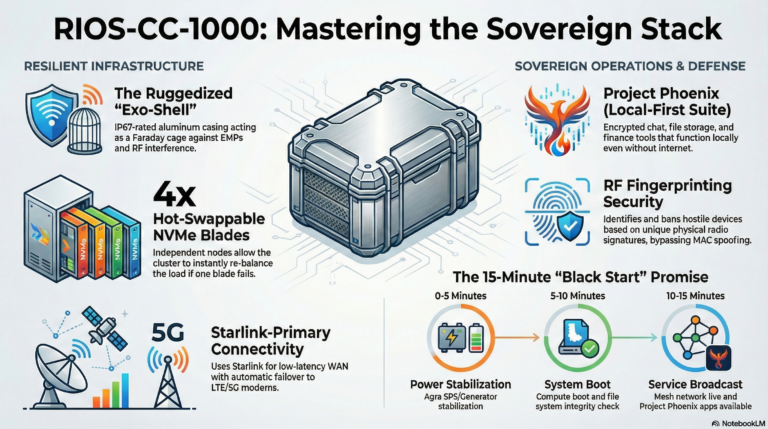
- Inbound Signal Ingestion & Coprocessor Verification: Incoming 5.9 GHz C-V2X Signal Request Messages (SRMs) are ingested by the drop-in card. The card incorporates a custom RISC-V instruction set extension or FPGA pairing accelerator (e.g., Lattice iCE40 / Efinix) to evaluate the 3 BN254/BLS12-381 pairing equations of incoming DCMD Groth16 proofs in <2\text{ ms}, operating well within standard 100\text{ ms} traffic controller execution loops.
- Dry-Contact Priority Request Output: Upon verifying a valid proof and confirming that the Poseidon2 nullifier is unspent in its sliding-window BFT cache, the verification card asserts a digital priority signal across dry-contact, opto-isolated NTCIP 1202 / 1211 priority lines connected to the traffic controller.
- MMU Conflict Supervision & Invariant Safety Gate: Crucially, the cabinet’s hardware Malfunction Management Unit (MMU) / Conflict Monitor retains absolute physical authority over traffic load switches. If a preemption command conflicts with an active green phase or green-grid lock, the MMU physically overrides the preemption input, forcing a safe yellow-to-red clearance interval before granting right-of-way.
5.2 USDOT V2X Alignment & 5.9 GHz C-V2X Frame Budgeting
The preemption architecture aligns directly with the USDOT National V2X Deployment Plan (“Saving Lives with Connectivity”), adapting to the FCC 24-123 report and order mandating C-V2X PC5 deployment in the 5.895–5.925 GHz spectrum band and enforcing the total sunset of legacy Dedicated Short-Range Communications (DSRC) by December 14, 2026.
Under the ITE RSU SDD v01.14d specification, C-V2X PC5 Mode 4 receiver sensitivity (\le 10%\text{ Packet Error Rate} at -94\text{ dBm}) establishes a strict receiver payload limit of 367 octets (bytes) per radio frame. To guarantee reliable reception, large post-quantum cryptographic keys must be separated from per-hop preemption frames.
Payload Component Byte Size Transmission Channel & Regime Standard / Governing Constraint Compliance & Cryptographic Function
Hybrid KEM Public Key 1,216\text{ Bytes} Pre-positioned out-of-band / Hospital Geofence (1.5\text{ km}). NIST FIPS 203 / IETF RFC 9180 Contains X25519 (32\text{ B}) + ML-KEM-768 (1,184\text{ B}) public keys. Stored in RSU geofence registries; never transmitted in C-V2X SRMs.
Hybrid KEM Ciphertext (C_{\text{KEM}}) 1,120\text{ Bytes} Transmitted once per session across 1.5\text{ km} Trauma Geofence. NIST SP 800-227 / HPKE Encapsulates ephemeral K_{\text{DEK}} for hospital intake. Delivered via high-gain MIMO or stationary optical dock.
Groth16 Outer Proof (\pi) 192\text{–}256\text{ Bytes} Per-Hop C-V2X Broadcast over 5.9 GHz PC5 Mode 4. SAE J2735_202409 / SAE J2945/B Embedded inside Signal Request Messages (SRMs). Fits within \le 367\text{-octet} PC5 frame budget alongside IEEE 1609.2 headers.
In-Circuit Poseidon2 Nullifier 32\text{ Bytes} Embedded inside SRM preemption payload. Poseidon2 Permutation / R1CS Field Single 256-bit scalar input (\mathcal{N}). Defeats Groth16 proof re-randomization and replay attacks at RSU nodes.
- Physical Metrology & Cross-Domain Threshold Standardization
6.1 Standardized Biophysical Calibration Matrix (SSOT-PHYS-2026-V2)
To resolve threshold divergences across healthcare, transport, logistics, and capital domains, this standard formalizes the Single Source of Truth Physical Calibration Matrix (SSOT-PHYS-2026-V2).
Calibration Parameter Standardized Value / Bounds Governing Standard / Reference Verification Engine / Hardware Failure Penalty / Veto Trigger
Whole Blood & Packed RBC Thermal Window 1.0^\circ\text{C} \text{ to } 6.0^\circ\text{C} AABB 35th Edition Standards (2026); 21 CFR 640 250 mL thermal-mass simulant probe + quad PT100 RTDs (10 Hz) Core probe >6.0^\circ\text{C} or <1.0^\circ\text{C} for >60\text{ s} trips 50% stake burn & cargo quarantine.
Organ Static Cold Storage (SCS) 2.0^\circ\text{C} \text{ to } 8.0^\circ\text{C} (Target 4\text{–}6^\circ\text{C}) OPTN/UNOS Preservation Guidelines Thermal-mass probe + free-piston Stirling cooler telemetry Cumulative degree-minute excursion \int \max(0, T – 8.0) dt > \tau_{\text{org}} trips clinical rejection veto.
Organ Normothermic Machine Perfusion (NMP) 34.0^\circ\text{C} \text{ to } 37.5^\circ\text{C} OPTN/UNOS NMP Protocols (OrganOx / OCS) Isolated CAN-FD bio-telemetry bus monitoring flow/pressure Perfusion pump flow loss or thermal drift >1.5^\circ\text{C} for >30\text{ s} halts transit authorization.
Cryogenic Biologics & mRNA Storage -90.0^\circ\text{C} \text{ to } -60.0^\circ\text{C} (Nominal -80^\circ\text{C}) USP Pharmacopeia General Chapter <659> Dual-redundant PT100 RTDs in Stirling cold box Sustained thermal rate-of-rise >2.0^\circ\text{C}/\text{hr} triggers immediate routing to emergency backup skid.
UWB Invasive Bedside Proximity (Tier A) d_{\text{invasive}} \le 0.30\text{ m} IEEE 802.15.4z HRP-UWB (FiRa Core 3.0) Asymmetric DS-TWR with 64-symbol AES-128 STS (DW3000) Calculated distance >0.30\text{ m} or STS timing check failure blocks smart pump drug administration.
UWB Docking & Curbside Proximity (Tier B) d_{\text{dock}} \le 0.50\text{ m} (\Delta t \le 3.33\text{ ns}) IEEE 802.15.4z HRP-UWB (FiRa Core 3.0) Asymmetric DS-TWR with OTP factory delay calibration Ranging error >0.50\text{ m} locks vehicle docking latches and halts L402 escrow release.
Terrestrial TDoA Location Accuracy (PoL) \le 1.5\text{ ns} clock sync; 2.0\text{ m} static / 4.0\text{ m} corridor IEEE 1588-2019 (White Rabbit); Galileo OSNMA Multi-static \ge 5-anchor RANSAC multilateration over fiber Spatial residual calculation >4.0\text{ m} relative to claimed GNSS track triggers meaconing tamper alarm.
ADA Transit Ramp Capacity Tiers 272\text{ kg} (Std) / 360\text{ kg} (Bariatric) / 454\text{ kg} (Heavy) 49 CFR § 38.23(b)(1); FMVSS 403/404 Hydraulic strain gauge + Lean 4 AST vehicle profile gate Boarding weight exceeding certified ramp enum tier trips physical deployment lockout.
- Strategic Implementation Roadmap & Adversarial Threat Model (2026–2036)
7.1 Phased 60-Month Regulatory & Infrastructure Deployment Roadmap
Operational Milestones by Epoch
- Epoch 1 (Months 1–12): Standards, Cryptographic Core & Shadow Pilots
- Ratify hybrid_cased_core schemas combining ML-KEM-768, AES-256-GCM, and Poseidon2 commitments.
- Freeze Groth16 preemption circuits with in-circuit Poseidon2 nullifier checks; deploy PLONK/Anemoi circuits for dynamic Lean 4 AST rules.
- Deploy non-actuating UWB DS-TWR shadow monitors in 2 hospital ICU wards.
- Stand up a 5-anchor White Rabbit PTPv2 TDoA test corridor integrated with Galileo OSNMA receivers.
- Bench-test the KurbKar-Med GaAs/PIN optical diode and ODU AMC® NP gear-lock electromechanical relay.
- Execute written HIPAA BAAs aligned with the July 2027 Privacy Rule compliance deadline.
- File FDA Section 524B / QMSR eSTAR and SBOM pre-submissions with infusion OEMs.
- Register Project Octagon energy storage and microgrid assets via IRS Energy Credits Online for IRC § 6417 Elective Pay.
- Epoch 2 (Months 13–24): Regional Corridor Meshes, NEMA TS2 Cards & DUNA Launch
- Activate live Quad-Stream Runtime Telemetry (\Psi_i(t)) with board-calibrated INA226 Landauer hardware gates.
- Deploy heterogeneous quorums across \ge 3 AI model families (Transformers, State-Space Models, Lean 4 kernels).
- Install MMU-supervised NEMA TS2 RISC-V Groth16 verification cards in 1 USDOT V2X Accelerator partner metro.
- Enable 5.9 GHz C-V2X PC5 Signal Request Messages for k \approx 7 biomorphic traffic parting.
- Enforce AABB_BLOOD_1_6C and OPTN thermal integral profiles across transport fleets.
- Attain full FDA 510(k) clearance for UWB-interlocked smart infusion pumps.
- Launch Medicaid NEMT WAV corridors under Wyoming DUNA governance paired with an authorized U.S.-banked Administrator.
- Epoch 3 (Months 25–42): Binding Biophysical Vetoes, L402 Settlements & Flocking
- Upgrade defense and critical infrastructure corridors to CNSA 2.0 ML-KEM-1024 encryption.
- Enforce live 50% / 25% / 10% Hierarchical Transitive Slashing and Instant Snap-Back Reversion.
- Enforce hardware-level BiophysicalVetoRegister.json relays across 700V DC hospital/depot microgrids.
- Scale L402 streaming micro-settlements paired with \ge 15% machine self-amortization sinking funds.
- Secure HHS OCR and CMS policy recognition for zero-knowledge preemption and automated smart-contract BAAs.
- Retire Net-60/90 factoring intermediaries across participating DUNA corridors.
- Epoch 4 (Months 43–60): Full Sustained Island-Mode Cutover & Legacy Retirement
- Achieve complete Asymptotic Parameter Foreclosure (Via Negativa) and zero-trust TPM 2.0 nullifier meshes across all autonomous fleets.
- Scale municipal V2X integration to support USDOT 2036 targets (85% top-75 metro intersection coverage).
- Operate full Sustained Island Mode via TriFi meshes, 700V DC microgrids, and Project Octagon Sovereign Factories.
- Decommission centralized insurance clearinghouses, legacy freight brokers, and unbacked credit issuance inside certified sovereign enclaves.
Master Implementation Matrix
Epoch & Timeline Cryptographic & Epistemic Deliverables Hardware & Physical Pilot Milestones Regulatory & Capital Gate Criteria
Epoch 1: Standards, Cryptographic Core & Shadow Pilots
(Months 1–12) • Ratify hybrid_cased_core schemas (ML-KEM-768 + AES-256-GCM + Poseidon2).
- Freeze Groth16 preemption circuits with nullifier checks; deploy PLONK/Anemoi for dynamic Lean 4 ASTs. • Deploy non-actuating UWB DS-TWR shadow monitors in 2 ICU wards.
- Stand up 1 5-anchor White Rabbit PTPv2 TDoA + Galileo OSNMA test corridor.
- Bench-test KurbKar-Med GaAs/PIN optical diode & ODU AMC® NP gear-lock. • Execute written HIPAA BAAs aligned with July 2027 Privacy Rule compliance.
- File FDA 524B / QMSR eSTAR + SBOM pre-sub with infusion OEM.
- Register IRC § 6417 storage/microgrid assets on IRS portal.
Epoch 2: Regional Corridor Meshes, NEMA TS2 Cards & DUNA Launch
(Months 13–24) • Activate live Quad-Stream Runtime Telemetry (\Psi_i(t)) with board-calibrated INA226 \lambda_{\text{HW}} Landauer gates. - Deploy heterogeneous \ge 3-family model quorums. • Install MMU-supervised NEMA TS2 RISC-V Groth16 cards in 1 USDOT V2X Accelerator partner metro.
- Enable C-V2X 5.9 GHz PC5 SRM k \approx 7 traffic parting.
- Enforce AABB_BLOOD_1_6C & OPTN thermal profiles. • Complete FDA 510(k) clearance for UWB-interlocked smart pumps.
- Launch Medicaid NEMT WAV corridor (49 CFR § 38.23 tiered ASTs) under Wyoming DUNA + banked Administrator.
- Attain full compliance with finalized HIPAA Security Rule.
Epoch 3: Binding Biophysical Vetoes, L402 Settlements & Flocking
(Months 25–42) • Upgrade critical infrastructure corridors to CNSA 2.0 ML-KEM-1024. - Enforce live 50% / 25% / 10% Hierarchical Transitive Slashing & Snap-Back. • Enforce hardware-level BiophysicalVetoRegister.json relays across Agra.Energy 700V DC hospital/depot microgrids.
- Scale L402 streaming settlements & \ge 15% machine self-amortization funds. • Secure HHS OCR / CMS policy recognition for zero-knowledge preemption & automated smart-contract BAAs.
- Retire Net-60/90 factoring inside participating DUNA corridors.
Epoch 4: Full Sustained Island-Mode Cutover & Legacy Retirement
(Months 43–60) • Full Asymptotic Parameter Foreclosure (Via Negativa) and zero-trust TPM 2.0 nullifier meshes across all autonomous fleets. • Scale municipal V2X integration alongside 2036 USDOT 85% top-75 metro intersection target. - Operate full Sustained Island Mode via TriFi meshes, 700V DC microgrids, and Project Octagon Sovereign Factories. • Decommission centralized clearinghouses, legacy freight brokers, and unbacked credit issuance inside certified sovereign enclaves.
7.2 Hardened Adversarial Threat Model & Regulatory Risk Matrix
Vulnerability / Attack Vector Baseline Vulnerability in 1.0.0-PROD Architecture Hardened 2.0.0-PROD-TRANSITION Technical & Regulatory Mitigation Residual Risk Assessment
Quantum Harvest-Now-Decrypt-Later (HNDL) Classical ElGamal / Paillier encryption of longitudinal patient telemetry (T_{\text{core}}) is vulnerable to future Shor’s algorithm decryption. Three-Tier Hybrid HPKE (RFC 9180): Wraps K_{\text{DEK}} using dual classical (X25519) + NIST FIPS 203 ML-KEM-768/1024 lattice primitives fused via NIST SP 800-227 KDM. Negligible. Requires breaking both classical elliptic curve and module-lattice discrete-logarithm hard problems simultaneously.
Groth16 Proof Malleability & Replay Attackers re-randomize intercepted Groth16 proofs (A, B, C) \to (A’, B’, C’), bypassing naive SHA256(π) hash deduplication at traffic cabinets. Enforce mandatory in-circuit Poseidon2 Nullifier \mathcal{N} = \text{Poseidon2}(S_{\text{TPM}}, \text{Epoch}_T, \text{Counter}) checked against a sliding-window BFT nullifier cache. Low. Residual risk constrained to physical TPM hardware extraction attacks requiring localized decapsulation.
Galileo OSNMA Signal Meaconing Galileo OSNMA authenticates E1-B navigation data but does not authenticate physical time-of-arrival ranging (ToA/PRN codes). Multi-Static \ge 5-Anchor Terrestrial TriFi TDoA: Synchronized via fiber White Rabbit (IEEE 1588-2019) to \le 1.5\text{ ns} RMS with RANSAC outlier rejection. Low. Requires simultaneous high-power terrestrial meaconing across \ge 5 geographically dispersed, synchronized anchors.
UWB Crystal Drift & Early-Pulse Injection Static turnaround delay scalars (3.5 ns) yield 3.0\text{ m} drift error at 20\text{ ppm} clock skew; standard preambles invite pulse injection. IEEE 802.15.4z HRP-UWB Asymmetric DS-TWR: Incorporates 64-symbol AES-128 STS preamble protection and OTP factory antenna delay calibration. Negligible. Physical layer timing errors bounded to <1\text{ cm}; STS encryption mathematically blocks preamble injection.
Transient Cold-Chain Air Probe Spikes Instantaneous air temperature probe spikes during door openings trigger destructive 50% stake burns on viable organ/blood shipments. Profile-Indexed Degree-Minute Thermal Integrals: Measured via 250\text{ mL} liquid thermal-mass simulant probes (AABB_BLOOD_1_6C, OPTN_SCS_4_8C). Low. Bounded by mechanical failure of dual PT100 RTD sensor hardware or Stirling refrigeration skids.