Institutional Investment Prospectus: Node 4 Strategic Infrastructure & Digital Collateralization
1. The Investment Thesis: Transforming Emerging Market Risk into Institutional Grade Yield
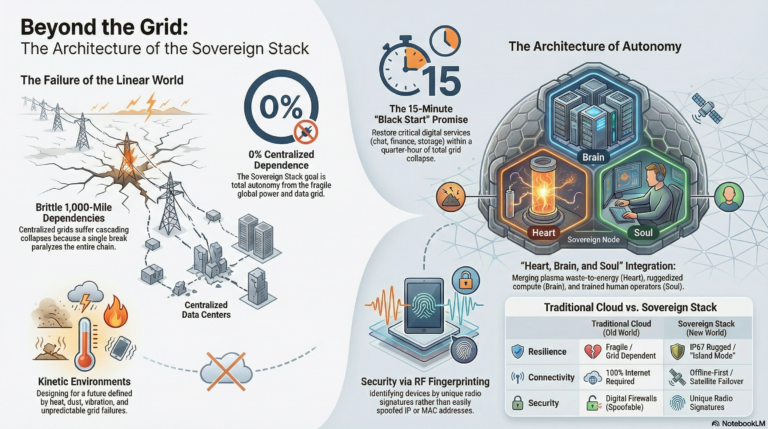
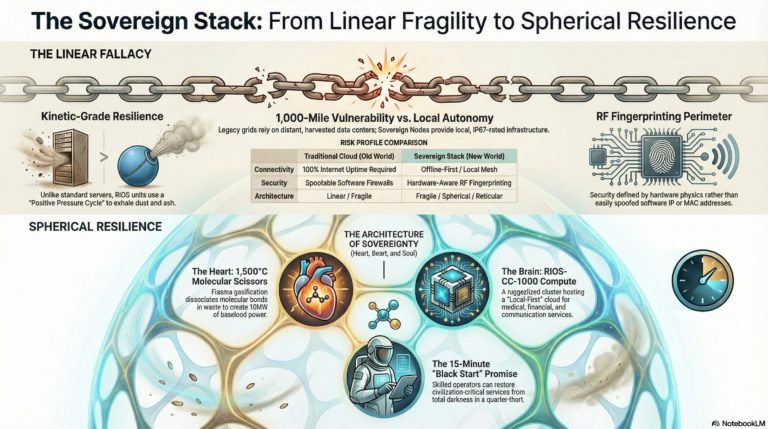
The Karamoja sub-region of Uganda has historically been defined by “linear fragility”—a vulnerability born from an unstable national grid, isolated supply chains, and the prohibitive cost of institutional trust. Node 4 represents a definitive pivot toward “spherical resilience.” By vertically integrating industrial agriculture, off-grid plasma gasification, and high-performance computing, we have engineered an autonomous ecosystem that operates in “Island Mode,” independent of external systemic failures. This prospectus outlines the activation of our “Legacy Blueprints”—the transition from the current “Sovereign Oasis” validation site to a full-scale, 7,000-acre Industrial Engine. By synthesizing physical production with cryptographic verification, Node 4 functions as a self-funding “Sovereign Bank,” converting raw biomass into a liquid, institutional-grade yield.
Deck
https://academy.dereticular.com/wp-content/uploads/2026/06/The_Kaabong_Perpetual_Engine.pdf
The Problem/Opportunity Framework: Kaabong Smart Eco-Industrial Park (SEIP)
| Traditional Emerging Market Constraint | Kaabong SEIP Solution |
| Energy Deficit: Grid instability and high industrial tariffs ($0.08+/kWh) cap economic throughput. | Sovereign Power: 210 TPD Plasma Gasification providing 7.11 MW of continuous, carbon-negative power at a fixed internal cost. |
| Agricultural Value Leakage: Commodities exit the region raw, with value-add occurring in foreign markets. | Integrated Biorefining: On-site conversion of hemp into pharmaceutical-grade oils and high-tensile industrial fibers. |
| Digital Exclusion: Lack of tier-grade compute prevents participation in the global AI and RWA markets. | UCC-1 Global Compute: A 1,000 H100 GPU cluster capturing global AI demand via Starlink-enabled “Island Mode” operations. |
The “Sovereign Bank” concept is the core of this thesis. By integrating physical hardware telemetry with real-time digital verification, the facility bypasses the “Illiquid Gap” that plagues traditional emerging market finance. We no longer rely on manual audits; production is proven mathematically, allowing for the immediate collateralization of assets. This physical foundation provides the essential substrate for the complex financial engineering and legal control mechanisms detailed herein.
——————————————————————————–
2. Physical Infrastructure: The Autonomous 7,000-Acre Industrial Engine
To maintain 24/7 industrial throughput, Node 4 utilizes a Continuous Rolling Rotation Model. This model eliminates the seasonal bottlenecks of traditional agriculture by ensuring a consistent, daily delivery of feedstock to the processing core. We are not just farming; we are managing a high-velocity industrial pipeline.
Autonomous Operational Cadence
Managing a 7,000-acre estate with sub-centimeter precision requires a decentralized autonomous swarm, mitigating the human-factor risks inherent in remote operations.
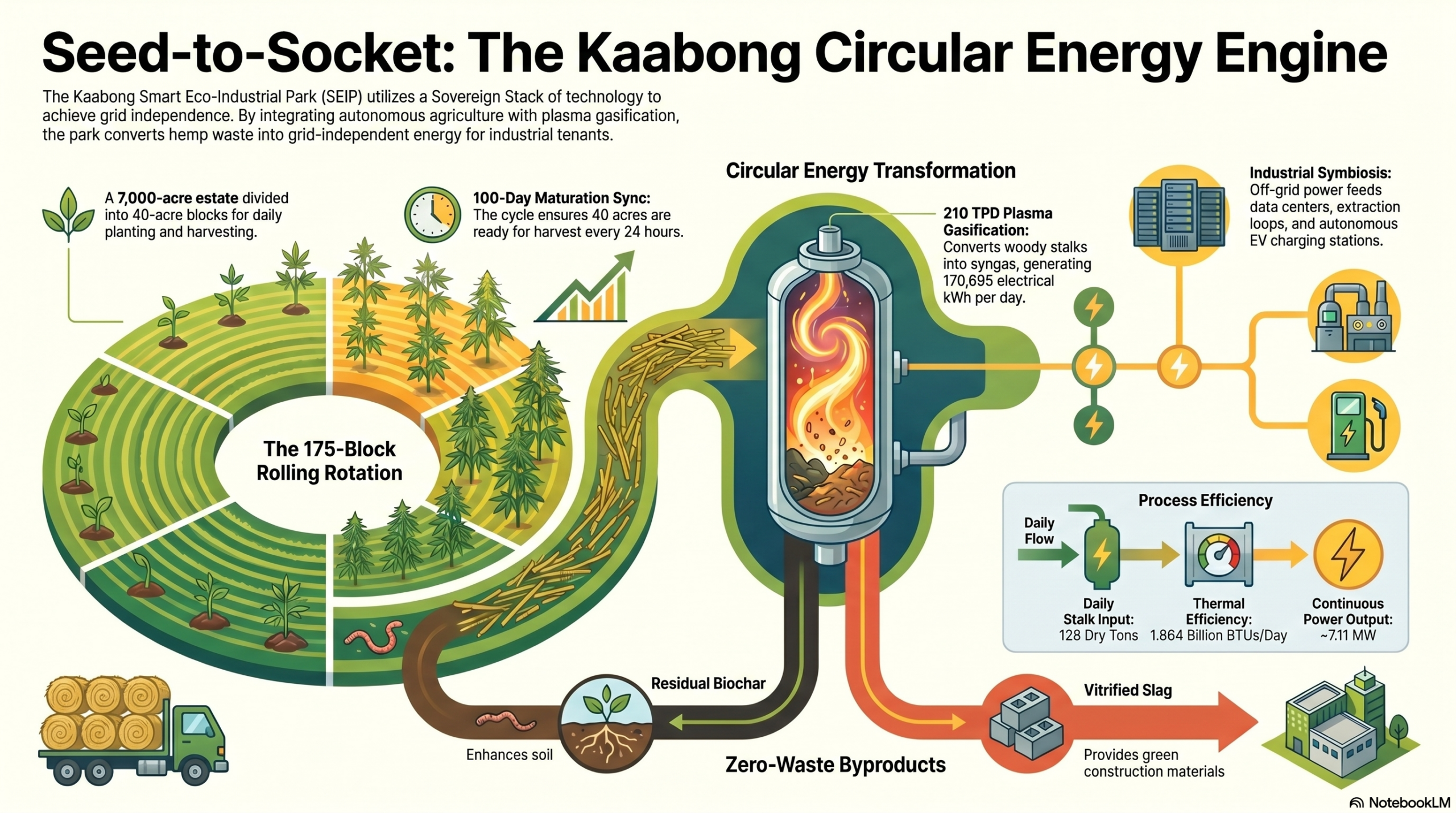
- The Rotation Math: The estate is partitioned into 175 operational blocks of 40 acres each. Every day, 40 acres are sown while 40 acres are harvested, perfectly matching the 100-day maturation cycle of industrial hemp.
- Seeding Swarm: Two 120 HP Sabanto-retrofitted hybrid tractors utilize GPS-RTK guidance to complete daily seeding in under 2 hours.
- Harvesting Swarm: A Class 7/8 rotary combine, retrofitted with an ASI Mobius autonomous kit, processes the daily 40-acre block in 3 hours.
- Risk Mitigation (Fiber Wrapping): Standard agricultural machinery is prone to “fiber wrapping”—where high-tensile hemp stalks seize rotating components. Our fleet utilizes specialized 30-foot draper headers and dual-knife sickle drives to ensure mechanical continuity.
- Storage Automation: Within the silos, Grain Weevil robots semi-autonomously level the grain surface, preventing the “biological fermentation” and spontaneous combustion risks associated with high-moisture seed storage.
Energy-Loop Integration: 210 TPD Plasma Gasification
The heart of the facility is a 210 Tons Per Day (TPD) Plasma Gasification system. The “Rotation Math” ensures the system operates at peak efficiency:
- Capacity Match: Scenario A (High-Density Fiber) yields 128 dry tons of stalks daily. This represents a near-perfect operational match (101% of intake capacity) for the gasifier at a 61% load.
- Thermal Kinetics: 128 dry tons (256,000 lbs) at 6,500 BTU/lb generates 1.664 Billion BTUs/day.
- Power Output: Operating at a 35% thermal-to-electrical efficiency, the system provides 7.11 MW of continuous, off-grid power. This allows the SEIP to function in “Island Mode,” entirely decoupled from the national utility.
Biorefinery Downstream Output (Scenario C: Balanced Output)
The daily 40-acre harvest of foliage (100 wet tons) is processed through a continuous-flow chilled solvent extraction loop:
[ 100 Wet Tons Leaf/Day ]
          │
          ▼
[ Chilled Solvent Extraction ]
          │
          ▼
[ 6,000 lbs (750 Gal) Crude Oil/Day ]
          │
          ▼
[ 3.15M Retail Lotion Bottles/Day ]
This high-volume physical production is the basis for our digital verification layer, transforming daily yield into verifiable capital.
——————————————————————————–
3. Financial Engineering: Non-Dilutive Capital Stacking & De-Risking
The financial architecture of Node 4 was born from the “Vanguard Pivot” of March 24, 2026. By re-scoping the project to prioritize modular validation, we have created a pathway to utilize private equity as a catalyst for massive, non-dilutive development funding.
The $30M Tiered Capital Stack
| Funding Tier | Source | Amount | Strategic Purpose |
| Tier I | InVentures (Venture Seed Equity) | $4,000,000 | Mandatory private matching layer; funds Phase 1 & 2 pilots. |
| Tier II | AfDB, UNDP, and EU Green Funds | $15,000,000 | Non-dilutive capital for common-user infrastructure and SEZ set-up. |
| Tier III | Concessional / Development Debt | $11,000,000 | Low-interest debt for hardware scaling (Gasifiers/HPC). |
InVentures Venture Studio Role
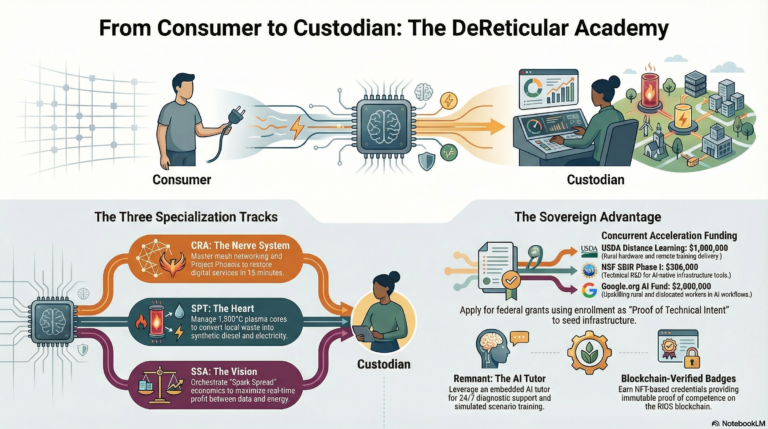
InVentures operates as a deeply integrated partner, embedding specialists into the SPV (Kaabong Agro-Energy Ltd.) to manage the following:
- Financial Orchestration: Melissa Chalfant directs the “Capital Stacking” strategy and manages compliance for the Green SEZ fiscal incentives.
- HardTech & Power Scale-Up: Ben Marquart oversees the 210 TPD gasification engineering and autonomous fleet integration.
- Biotech & IP R&D: Gerardo Garza and Dr. H. Joseph Yoon optimize the downstream extraction of oils and pharmaceutical-grade inputs.
Fiscal Incentives & ROI
By operating within a “Green Special Economic Zone (SEZ),” Node 4 benefits from:
- 10-Year Corporate Income Tax Holiday: For developers exporting ≥80% of output.
- 0% Import Duties: On all plant, machinery, and raw materials (Gasifiers, Starlink, GPU clusters). These incentives, combined with the 83% EBITDA margin of compute operations, drive a capital recovery timeline of 2 to 4 years.
——————————————————————————–
4. The Digital-Physical Bridge: Solving the ‘Oracle Problem’
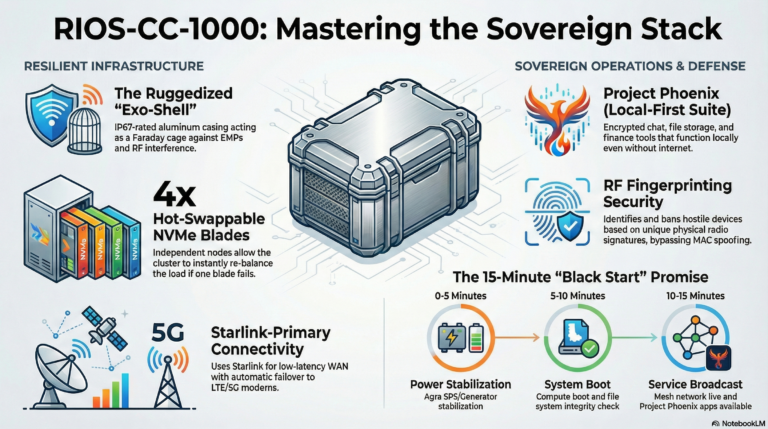
Institutional lenders cannot wait for manual audits in remote Karamoja. The RIOS Pilot Command Center solves this “Oracle Problem” by shifting trust from human testimony to mathematical certainty.
Cryptographic Verification Pipeline
- Telemetry Capture: Machine-level sensors (flow meters, scale sensors, and power logs) capture immutable production data.
- Zero-Knowledge (ZK) Proofs: Data is hashed using ZK-cryptography, allowing the system to verify production occurred without exposing sensitive crop formulas or proprietary machine settings.
- Dynamic NFT: This verified payload is minted as a “Digital Twin” Dynamic NFT, representing the legal title to the underlying physical batch.
The Locutus Ledger & Sovereign Keys
All production logs are written to the Locutus Ledger, an append-only, tamper-evident cryptographic record. Data integrity is enforced via Sovereign Keys—physical, tamper-evident hardware security keys. This ensures that the digital record is a 1:1 reflection of the physical state, providing the “Controllable Electronic Records” required for institutional lending.
——————————————————————————–
5. Legal Framework & Collateral Enforceability (UCC Article 12)
Node 4 leverages the most advanced shifts in commercial law to ensure that a digital token carries the same legal weight as a physical warehouse receipt.
- UCC Article 12 (Controllable Electronic Records): Under Article 12, our Dynamic NFTs are classified as CERs. Lenders “perfect” their security interest through technical control of the smart contract. Under the “Control” test, the legal seizure of the NFT is the legal seizure of the physical hemp and energy credits. No third-party bank intermediary is required.
- CFTC Letter No. 25-39: As of December 2025, tokenized Real-World Assets (RWAs) are eligible as margin collateral in derivatives markets. This allows institutional clearers to treat Node 4’s production as liquid, high-quality collateral.
- The GENIUS Act (2025): Enables 24/7 continuous settlement via compliant payment stablecoins. While traditional banks close on weekends, the RIOS network releases credit lines in seconds upon proof of harvest.
——————————————————————————–
6. Integrated Monetization Ecosystems: Compute, Carbon, and Mobility
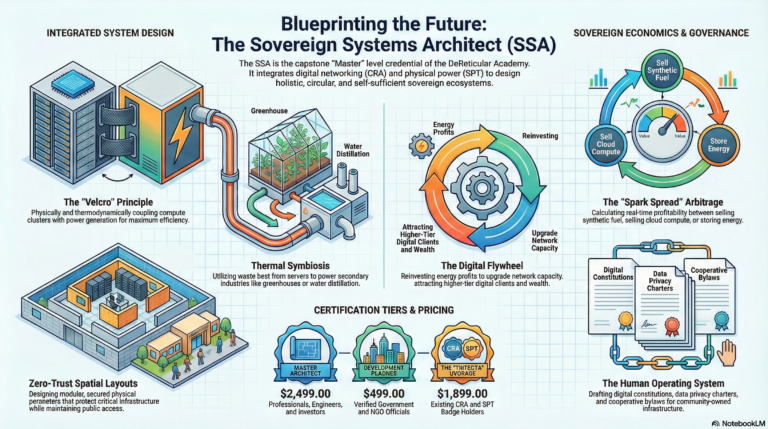
Our model of “Industrial Symbiosis” ensures that the waste of one process is the high-margin fuel of another, creating “Spherical Resilience” against commodity price volatility.
- UCC-1 Global Compute Arbitrage: We host a 1,000 H100 GPU cluster. By purchasing power from the on-site gasifier at a fixed $0.07/kWh tariff, we eliminate the largest cost of AI compute. This generates a Year 5 EBITDA of $10.23M at an 83% operating margin.
- Carbon Finance (Paris Agreement Article 6): The gasification of hemp stalks produces biochar, a permanent carbon sink. RIOS automatically verifies and mints these as RWA carbon credits, providing a high-margin, non-dilutive digital revenue stream.
- The Mobility Sandbox (Kaabong Kars): Our Mobility-as-a-Service (MaaS) fleet consists of 20 rugged electric UTVs. By utilizing on-site power and autonomous logistics in a private, high-value environment, the fleet projects a Year 7 EBITDA of $3.23M.
——————————————————————————–
7. Risk Mitigation and Strategic Roadmap
We employ a phased approach to empirically validate costs and thermal efficiency before full-scale deployment.
Risk Mitigation Matrix
| Identified Risk | Active Mitigation Strategy (RIOS-Enabled) |
| Logistical/Supply Chain | The Vanguard Pivot: Re-scoped Node 4 to a modular setup; heavy hardware manufacturing moved to Node 1 (Chicago). |
| Gasifier Cost | Phase 2 Validation: Stress-testing a 10–20 TPD pilot unit to validate thermal efficiency before the 210 TPD build. |
| Land Tenure | Out-Grower Cooperative: Structured as a cooperative lease; local owners receive training, compensation, and off-grid power. |
| Regulatory Delay | Automatic eCBA: RIOS logs Natural and Social Capital metrics from Day 1 to ensure Green SEZ compliance. |
Phased Development Timeline
- Phase 1 (Months 0-3): Deploy RIOS Pilot Command Center; secure 100-200 acre pilot plot; validate soil/solar telemetry.
- Phase 2 (Months 3-12): Cultivate pilot crop; install 10-20 TPD gasifier unit; initiate skills transfer at the on-site Academy.
- Phase 3 (Months 12-24): Expand to 7,000-acre rotation; commission the full 210 TPD Plasma Gasifier and Biorefinery.
Final Call to Action: Node 4 is the first institutional-grade, cryptographically verified infrastructure project in East Africa. This is a rare opportunity to participate in a sovereign, resilient asset class that transforms emerging market risk into a mathematical certainty of yield.