DeReticular Sovereign Infrastructure and Non-Dilutive Capital Architecture
Executive Summary
The DeReticular ecosystem represents a strategically engineered alternative to traditional venture capital (VC) for deep-tech, hardware-intensive, and sovereign infrastructure ventures. High-capital expenditure (CapEx) projects—including microgrids, thermochemical energy, and autonomous kinetic systems—often face a structural mismatch with the 5-to-7-year exit horizons and aggressive equity dilution characteristic of conventional VC.
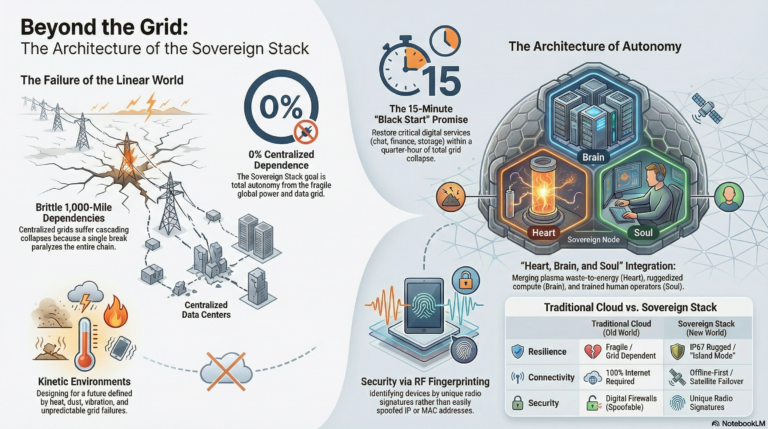
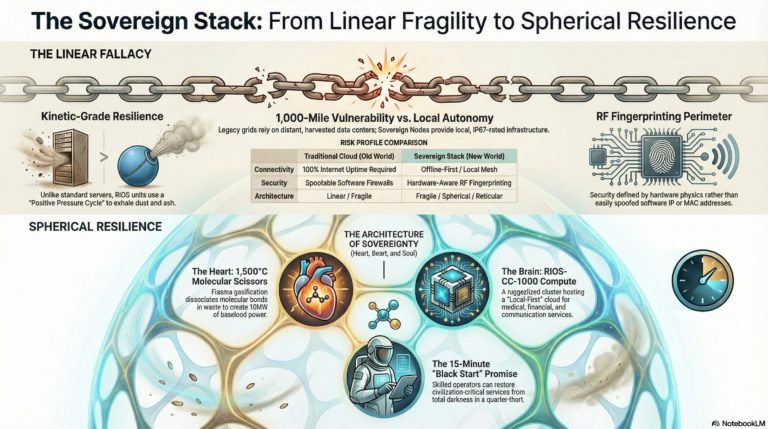
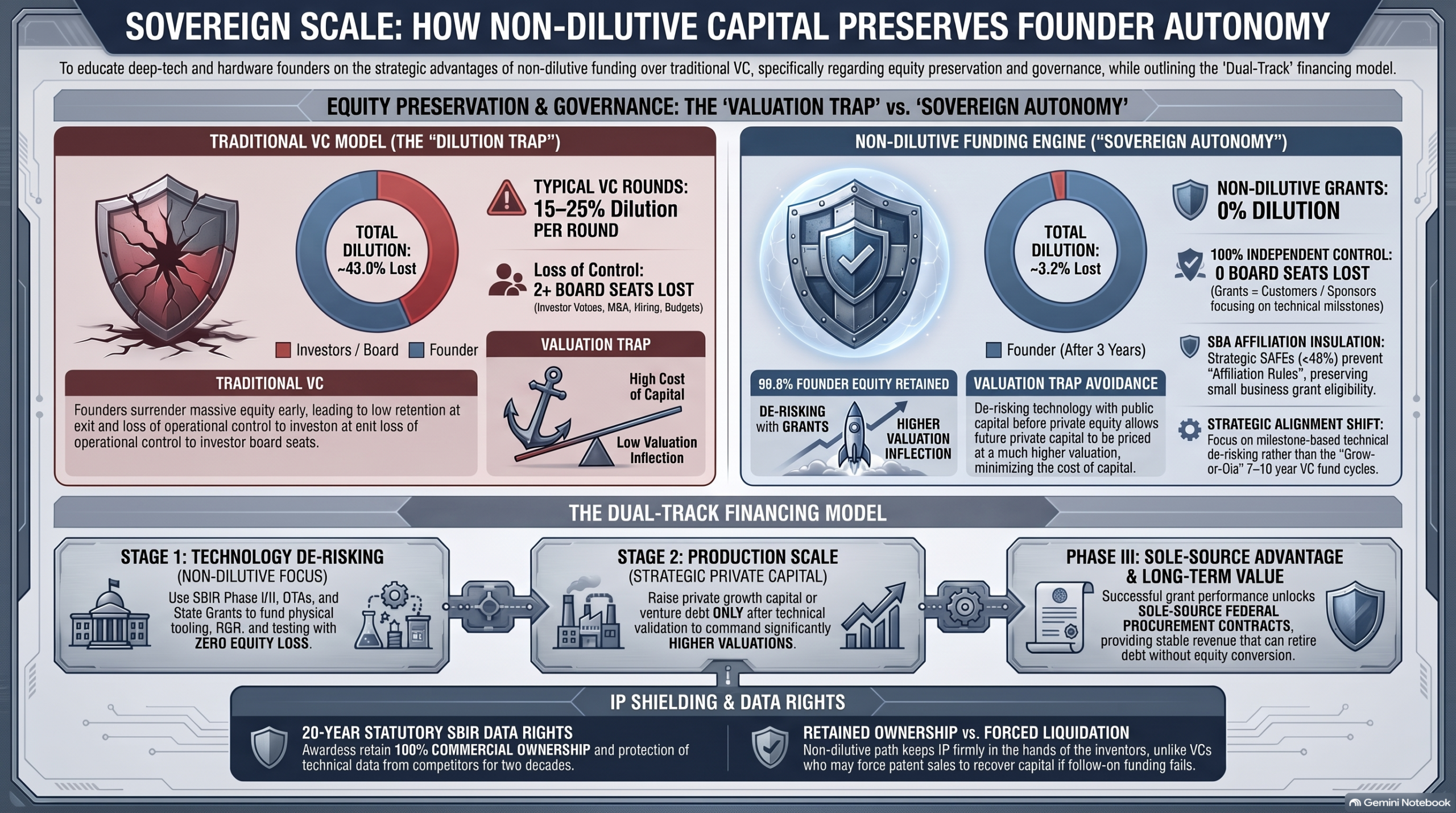
To address this, DeReticular utilizes a Non-Dilutive Funding Engine managed through its Venture Studio and Academy. This model integrates federal grants (SBIR/STTR), Other Transaction Authority (OTA) agreements, and Broad Agency Announcements (BAAs) with strategic private capital via Rule 506(c) SAFEs (Simple Agreements for Future Equity). This “Dual-Track” approach aims to de-risk core intellectual property (IP) and physical prototyping with zero to minimal equity surrender, preserving founder control and protecting technical data through 20-year statutory SBIR Data Rights. The ecosystem’s ultimate goal is the deployment of sovereign, local-first nodes—comprising power, compute, and comms—that function independently of centralized macro-grids.
- The DeReticular Ecosystem Architecture
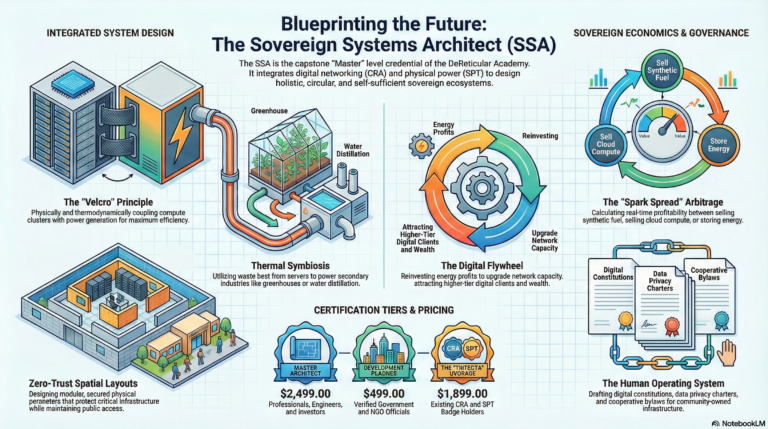
The ecosystem is designed as a closed-loop sovereign architecture, providing a unified stack of power, computation, communication, and mobility.
1.1 Core Ventures and Capabilities
Venture Identity and Primary Function Maturity Level
Agra Dot Energy Thermochemical energy and captive behind-the-meter power. Focuses on plasma gasification, parabolic solar thermal, and Pawnee Rotary GenSets. Prototype / Development
Kurb Kars Autonomous kinetic infrastructure and tactical mobility. Features 700V DC architecture and RIOS swarm telemetry. Prototype / Development
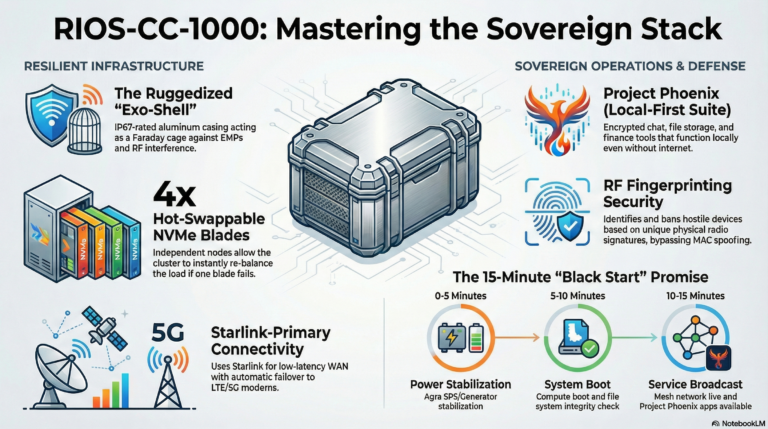
Gen 5 Pods Modular, ruggedized enclosures for sovereign communications, edge compute, and microgrids. Designed for EMP resistance. Development
DAOS R Us Expeditionary field testing and extreme-edge validation for air-gapped swarms and biomass-powered microgrids. Prototype / Development
TriFi Wireless Established federal prime contractor used as a bridge for defense and telecommunication solicitations. Operational
DeReticular Venture Studio Incubation engine focusing on hardware design, IP structuring, and dual-use commercialization. Operational
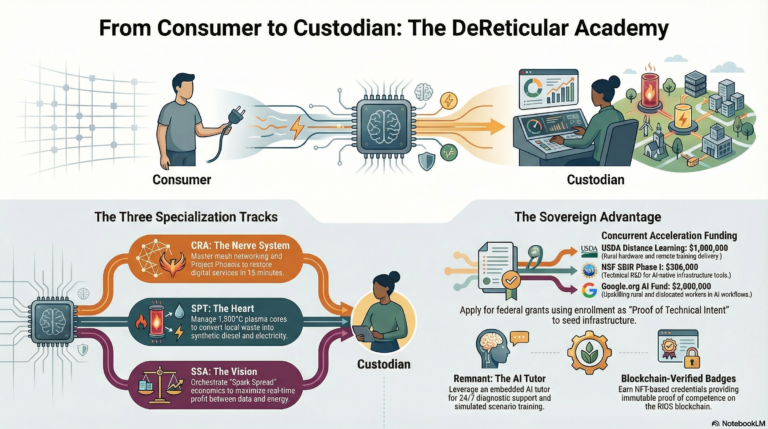
DeReticular Academy Research repository and educational clearinghouse for technical dossiers and proposal modules. Operational
1.2 The Sovereign Thesis
The “DeReticular” strategy (prefixing De- to the Latin reticulum or “small net”) focuses on reducing dependence on externally managed, single-point-of-failure utility and telecom networks. The goal is the deployment of Generation 5 (Gen 5) Nodes—ruggedized field enclosures providing sovereign communications (MANET/SDN), sovereign power (DC-coupled microgrids), and edge compute (zero-trust AI engines).
- Non-Dilutive Capital Architecture vs. Traditional VC
A primary differentiator for the DeReticular model is the rejection of the “Grow-or-Die” pressure of traditional VC in favor of milestone-based technical de-risking.
2.1 Comparative Analysis
Vector DeReticular Non-Dilutive Workflow Traditional Venture Capital
Equity Impact 0% Dilution (Grants) / Compressed (SAFEs) 15%–25% Dilution per round
Governance 100% Founder Control Board seats, veto rights, and covenants
IP Ownership Retained (20-year SBIR Data Rights) Assigned to company (controlled by investors)
Cost of Capital High labor (proposals) / Low capital cost Low labor / High long-term equity cost
Exit Horizon Mission/Milestone-driven 7–10 year fund cycle (10x–100x pressure)
2.2 The “Dual-Track” Hybrid Model
The ecosystem leverages a hybrid strategy to maximize capital efficiency:
- Stage 1: Technical De-Risking: R&D, tooling, and testing are funded via SBIR/STTR and state grants. This eliminates technical risk using public capital before any equity is priced.
- Stage 2: Production Scale: Private growth capital is raised via SAFEs or Venture Debt only after technical validation, allowing for significantly higher valuations and minimal dilution.
- Stage 3: Federal Procurement: Utilizing Phase III sole-source contracting eligibility to secure recurring public-sector revenue without competitive bidding friction.
- Four Core Execution Pillars
To transition prototypes into production-grade, defense-accredited assets, the ecosystem follows four foundational pillars.
3.1 Pillar 1: Hardware De-Risking and Certification
The ecosystem moves hardware from TRL (Technology Readiness Level) 4–6 to TRL 7–8 through third-party validation:
- Gen 5 Pods: Target MIL-STD-188-125-1 for high-altitude EMP protection, requiring 80–100 dB attenuation.
- Agra Dot Energy: 500-hour continuous duty cycle tests for plasma gasifiers and Pawnee GenSets; UL 1741 SB / IEEE 1547 for grid-tie and anti-islanding.
- Kurb Kars: Swarm trials in GNSS-denied environments and 700V DC bus stress testing.
3.2 Pillar 2: Automated Rule 506(c) SAFE Engine
To meet mandatory federal matching requirements (e.g., AFWERX or DOE cost-shares), the Venture Studio utilizes an automated Regulation D, Rule 506(c) platform.
- General Solicitation: Allows public marketing of investment opportunities to accredited investors.
- Mandatory Verification: Uses third-party APIs to verify investor accreditation (tax returns, CPA letters) as self-certification is legally insufficient under 506(c).
- Compliance Gates: Integrated KYC/AML, OFAC, and CFIUS/FOCI (Foreign Ownership, Control, or Influence) screening to protect dual-use critical technologies.
3.3 Pillar 3: Federal Accounting and Cybersecurity
To secure multi-million-dollar defense contracts, the ecosystem must adhere to strict federal standards:
- SF 1408 Compliance: Establishes auditable job-cost accounting that segregates direct R&D costs from indirect pools (Fringe, Overhead, G&A).
- FAR Part 31 Firewalls: Mandatory segregation of “unallowable costs” (e.g., SAFE legal fees, marketing, interest) from government-reimbursed ledgers.
- CMMC 2.0 / NIST SP 800-171: Implementation of 110 cybersecurity controls, utilizing FedRAMP High-authorized cloud enclaves (e.g., AWS GovCloud) for Controlled Unclassified Information (CUI).
3.4 Pillar 4: SBA Affiliation Insulation
Statutory eligibility for SBIR/STTR grants requires each entity to be a “Small Business Concern” (fewer than 500 employees). DeReticular must avoid “affiliation” under 13 CFR § 121.103:
- Minority Governance: The Venture Studio maintains minority equity stakes (<49%).
- Elimination of Negative Vetoes: Spinout bylaws must exclude investor vetoes over budgets, hiring, or operational debt.
- Arms-Length SLAs: Service Level Agreements between the Studio and portfolio companies are billed at fair-market rates, with spinouts retaining the right to terminate services.
- Strategic SWOT Analysis
Strengths (Internal) Weaknesses (Internal)
- Integrated Sovereign Stack (Power/Compute/Comms) • Early Technology Readiness Levels (TRL 3–6)
- Zero-Dilution Cap Table preservation • Resource dilution across multiple spinouts
- 20-Year Statutory SBIR Data Rights • Federal payment latency (30–90 day lag)
- Established Prime pipeline (TriFi Wireless) • Lack of final 3rd-party certifications
Opportunities (External) Threats (External) - DoD demand for resilient edge systems • Federal budget and SBIR reauthorization volatility
- Behind-the-meter power for AI data centers • SEC/SBA scrutiny regarding affiliation or broker status
- State Microgrid Legislation (WV H.B. 2014) • ITAR/EAR export controls and CFIUS divestment risks
- Strategic Implementation Roadmap (24 Months)
- Q1 (Months 1–3): Audit and amend spinout bylaws to eliminate SBA veto rights; deploy SF 1408-compliant accounting and timekeeping.
- Q2 (Months 4–6): Launch automated 506(c) portal; begin 500-hour GenSet runs; establish NIST SP 800-171 secure cloud enclave.
- Q3–Q4 (Months 7–12): Complete MIL-STD-188-125 EMP chamber testing for Gen 5 Pods; syndicate $2.0M+ in grant-matching SAFEs; undergo mock DCAA accounting audit.
- Year 2 (Months 13–24): Scale production of Gen 5 Pods; execute Phase III Sole-Source defense procurement contracts; commission multi-megawatt Agra gasification sites.
- Critical Regulatory and Technical Notes
- SBIR Data Rights: Under the SBA Policy Directive, awardees retain 20-year protection of technical data, preventing government disclosure to commercial competitors.
- Broker-Dealer Safe Harbor: To avoid unregistered broker-dealer liability under Exchange Act § 15(a), the Studio must avoid transaction-based success fees, instead utilizing fixed-rate service fees (SLAs).
- West Virginia H.B. 2014: Provides statutory exemptions for “Certified Microgrid Districts.” However, certification is formally granted by the WV Secretary of Commerce, not the developer. Decoupling from PJM interconnection queues applies strictly to islanded, non-exporting facilities.
- DCAA Readiness: DCAA does not grant “universal approval”; accounting systems are audited upon formal agency request for specific cost-reimbursable contracts.