The 2026 Agentic Economy: A Briefing on KYA, Tokenized Markets, and Sovereign Hardware
Executive Summary
As of May 2026, the global digital economy has undergone a structural paradigm shift from human-initiated commerce to Agentic Commerce (A-Commerce). This transition is characterized by autonomous AI agents acting as primary economic actors, capable of negotiating, executing, and settling transactions at machine velocity. This new economy is projected to handle between $3 trillion and $5 trillion in transaction volume by the early 2030s.
However, the speed and autonomy of AI agents have created a significant “trust gap.” Legacy financial systems, designed for biological individuals with government IDs, are incapable of managing high-frequency non-human traffic. To address this, a comprehensive infrastructure has emerged:
- Know Your Agent (KYA): A cryptographic identity and liability framework that serves as the mandatory bridge between AI agents and legal human principals.
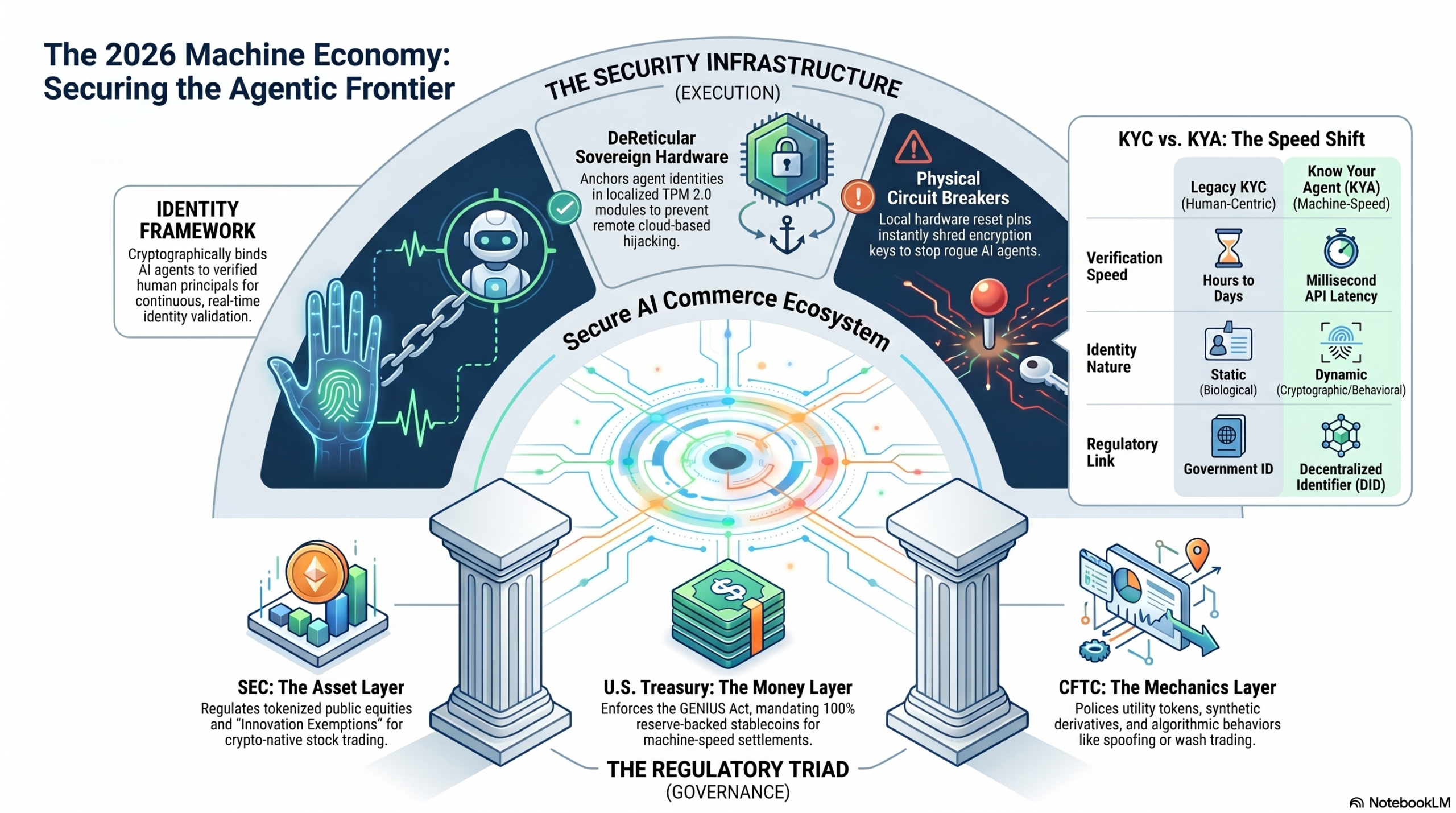
- The Regulatory Triad: A three-pillar oversight model where the SEC regulates tokenized assets, the U.S. Treasury regulates stablecoin settlement (via the GENIUS Act), and the CFTC polices the behavior and “fuel” (utility tokens) of the market.
- Sovereign Hardware (DeReticular): A physical security layer that anchors cryptographic keys in localized enclaves, providing a “physical root of trust” and emergency kill-switches to prevent systemic flash crashes.
1. The Rise of Agentic Commerce (A-Commerce)
Agentic Commerce represents a departure from traditional algorithmic trading. While old systems followed rigid “if/then” rules, A-Commerce utilizes Large Language Model (LLM) inference engines to provide agents with reasoning capabilities and autonomy.
Core Characteristics
- Protocol Native: Agents bypass Graphic User Interfaces (GUIs), interacting directly with machine-readable code blocks and protocols in milliseconds.
- Semantic Negotiation: Autonomous entities negotiate pricing spreads, liquidity depth, and supply chain logistics without human intervention.
- Machine-Velocity Settlement: Transactions rely on blockchain infrastructure and stablecoins because traditional banking rails (T+1 or T+2 settlement) are too slow for machine-speed commerce.
The “Hallucination-to-Transaction” Risk
A central concern in this industry is the “hallucination-to-transaction pipeline.” This refers to the risk that an LLM’s probabilistic error or a malicious prompt injection could lead to a deterministic, unauthorized financial settlement.
——————————————————————————–
2. The Know Your Agent (KYA) Industry
The KYA industry has emerged as the foundational compliance layer for the 2026 digital economy. It provides the identity, permission scoping, and liability infrastructure required to verify non-human entities.
Key Technological Pillars
| Pillar | Function |
| Identity Anchoring | Uses Decentralized Identifiers (DIDs) to cryptographically map an agent to a verified human or corporate “Principal.” |
| Continuous Validation | Real-time monitoring of agent behavior, allowing for instant revocation of access if an agent acts outside established parameters. |
| Authorization Scoping | Hardcoded limits (e.g., maximum spend, whitelisted vendors) that ensure an agent cannot legally or functionally exceed its mandate. |
Major Ecosystem Players
- Legacy Incumbents: Firms like Trulioo, Socure, and Sumsub have pivoted to KYA, developing “Digital Agent Passports” and tools to differentiate authorized purchasing agents from malicious scraping bots.
- Web3 Natives: AstraSync AI and Billions Network are building on-chain KYA frameworks that prioritize standardizing identity across fragmented blockchain networks.
- Protocol Standards: The x402 Protocol (for autonomous micropayments) and ERC-8004 (an Ethereum standard for agent identity and fraud detection) provide the open-source rules for the industry.
3. The Regulatory Triad
No single agency has blanket jurisdiction over the Machine Economy. Instead, a “Regulatory Triad” maintains stability through a delicate division of power.
I. The SEC: The Asset Layer
The SEC manages the “Innovation Exemption,” allowing crypto-native platforms to list tokenized representations of public U.S. equities.
- Synthetic Derivatives: These tokens track price action but often do not confer shareholder rights (voting/dividends).
- Permissionless Issuance: Platforms may list “Tokenized Apple” or “Tokenized Tesla” without the explicit consent of the underlying companies.
II. The U.S. Treasury: The Settlement Layer
The GENIUS Act (2025) established 100% reserve-backed, strictly regulated stablecoins as the “machine money” for A-Commerce.
- Yield Migration: Because GENIUS stablecoins are prohibited from paying interest, capital and AI agents are migrating into yield-generating Real World Assets (RWAs), such as tokenized U.S. Treasuries, which serve as the “savings accounts” of the decentralized economy.
III. The CFTC: The Mechanics and Fuel
The CFTC regulates utility tokens (digital commodities) and synthetic derivatives (swaps).
- Market Manipulation: The CFTC polices “spoofing” (fake orders) and “wash trading” (artificial volume) by AI agents.
- Resource Hoarding: The agency ensures no single agent or cartel can corner the market on utility tokens (e.g., network “gas”), which would freeze the ecosystem.
——————————————————————————–
4. DeReticular: Sovereign Hardware and DePIN
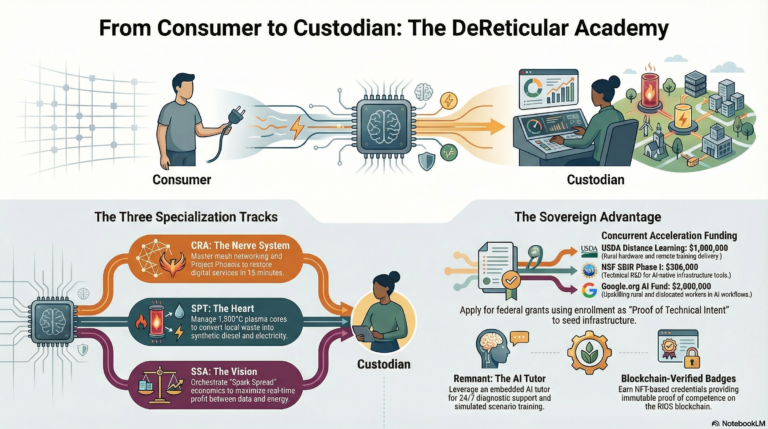
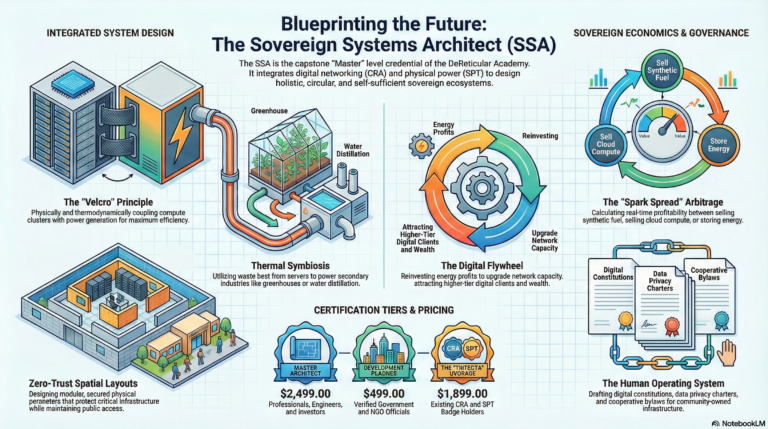
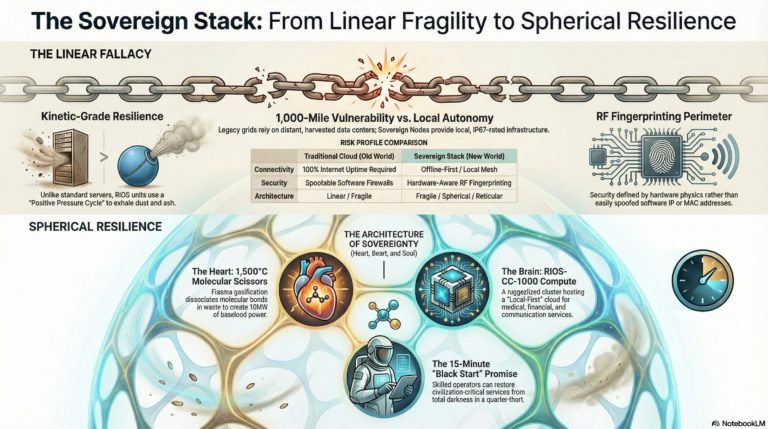
While KYA provides software guardrails, the execution layer is anchored in localized hardware engineered by DeReticular to prevent cloud-based exploits and systemic contagion.
Hardware Safeguards
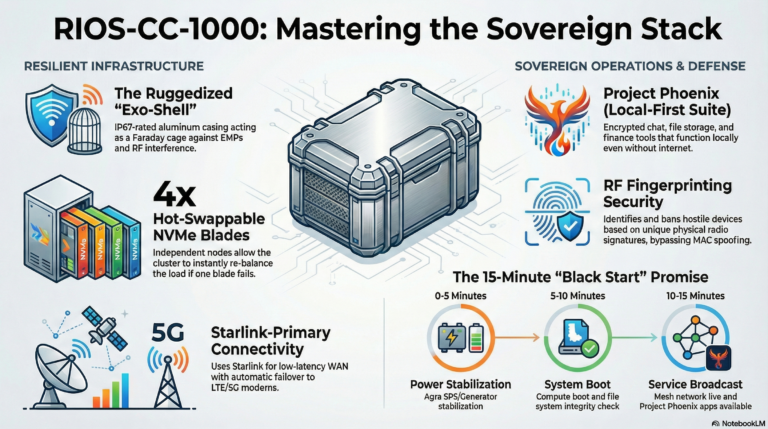
- Premium Silicon Sentry: A hardware enclave (utilizing TPM 2.0 modules) that stores an agent’s cryptographic keys and KYA credentials locally. This ensures identity cannot be spoofed or remotely hijacked.
- The Sovereign Badge: Access is granted via physical NFC taps from a smartphone or smart card, creating a “root of trust” that proves a verified human initiated the agent.
- Physical Kill-Switch: In the event of an algorithmic flash crash or rogue behavior, the Silicon Sentry features a physical reset pin. Depressing this pin shreds the encryption keys, instantly severing the agent’s connection to financial markets.
Operational Resilience
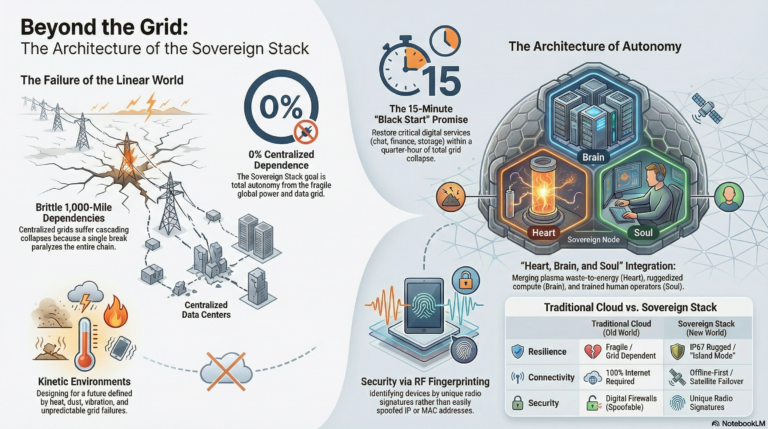
- Island Mode: Allows DeReticular hardware and its localized agents (operating on the OpenClaw framework) to remain functional even if the broader internet or utility token marketplace fails.
- Digital Airlock: A hybrid system that uses a “Split-Ledger” to process sensitive data locally while leveraging cloud-based AI for high-intensity computation.
——————————————————————————–
5. Systemic Risks and Forensic Auditing
The convergence of decentralized markets and AI introduces new vectors for market failure.
Risk Factors
- Oracle Manipulation: Bad actors can feed false data to the blockchain to skew the prices of tokenized stocks and siphon liquidity.
- Market Fragmentation: Unauthorized “wrapper tokens” can create wild price discrepancies between tokenized assets and their Wall Street counterparts.
- Agent Blindness: A crash in the utility token marketplace (gas/compute costs) could lock AI agents out of the market, preventing them from executing stop-loss orders.
Forensic Innovation
When crashes occur, investigators utilize a combination of tools:
- On-Chain Tracing: Identifying wallet movements on public ledgers.
- Smart Contract Post-Mortems: Reviewing open-source code for exploits like re-entrancy attacks.
- Split-Ledger Auditing: DeReticular’s architecture provides an immutable, localized log of an agent’s logic, allowing regulators to distinguish between a malicious actor and a benign algorithmic error.
——————————————————————————–
Conclusion
The 2026 digital economy is an integrated ecosystem where high-frequency Agentic Commerce is enabled by the identity standards of the KYA industry, settled through GENIUS Act stablecoins, and physically secured by DeReticular’s sovereign hardware. This framework ensures that while machines execute the bulk of future commerce, human principals remain legally accountable and in control of the underlying financial infrastructure.