Strategic Assessment: The Great Decoupling — Centralized vs. Sovereign AI Ecosystems
1. The Philosophical Rift: Spherical Resilience vs. Cloud Convergence
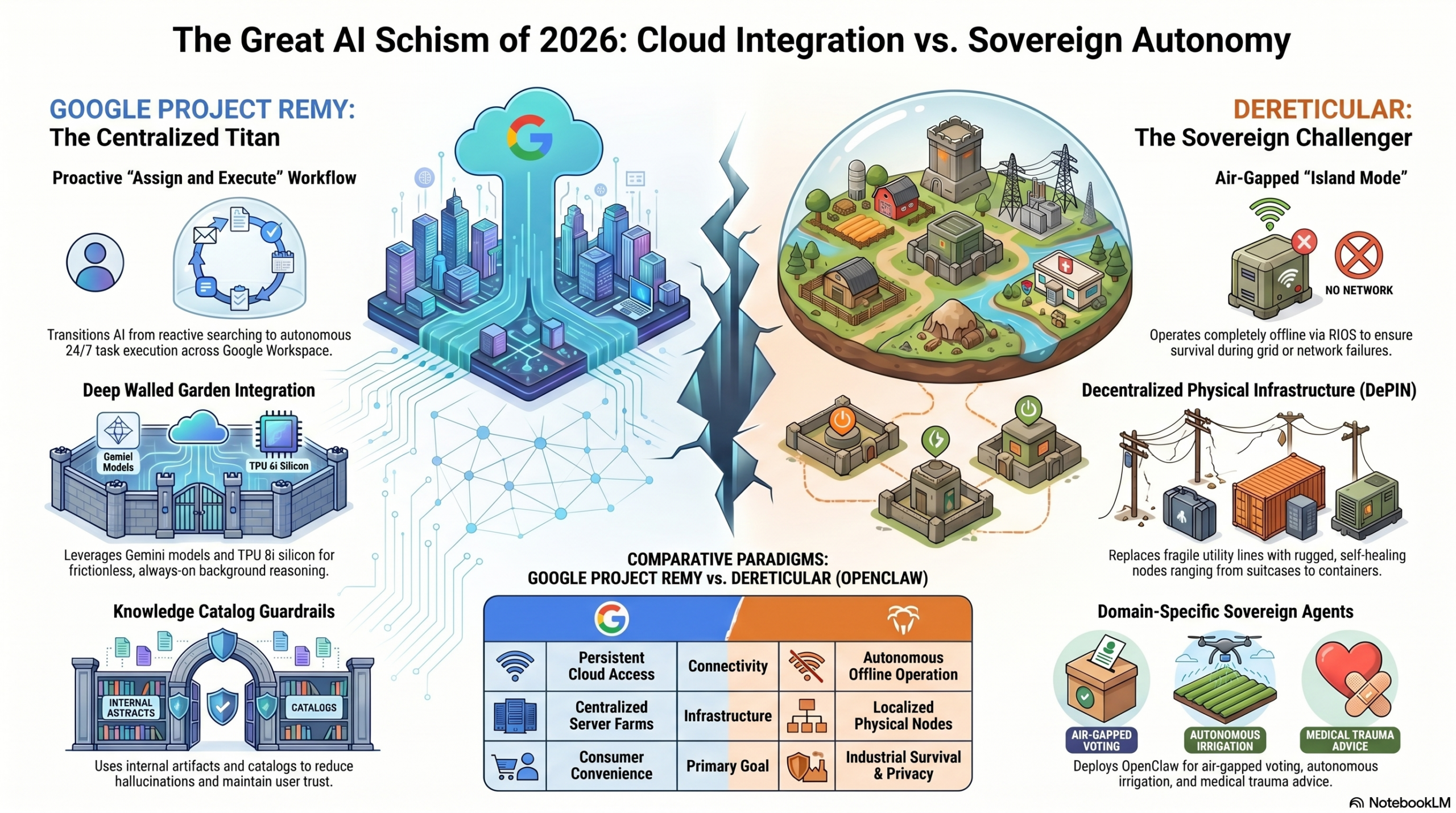
By mid-2026, the artificial intelligence landscape has matured from reactive Large Language Models (LLMs) into the era of “Agentic AI.” This shift represents a transition from chatbots that respond to prompts to autonomous systems that proactively manage complex workflows. In this high-stakes environment, a strategic decoupling has occurred. On one side, Google Project Remy seeks to perfect “Cloud Convergence,” a model of hyper-integrated, centralized oversight. On the other, DeReticular is engineering “Spherical Resilience” through its Sovereign Automation line, aiming to re-industrialize the world via self-healing, localized nodes.
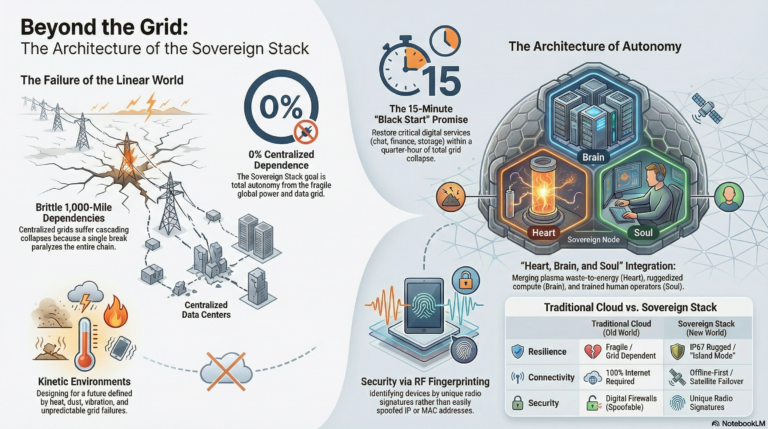
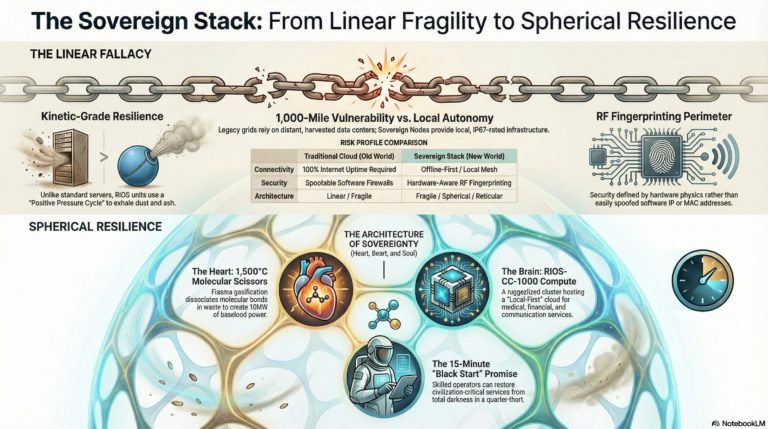
The core tension lies in DeReticular’s “Death of the Line” philosophy. This ideology argues that traditional, linear dependencies—centralized power grids and long-range fiber-optic data lines—are single points of failure that render modern civilization fragile. DeReticular’s mission is to replace these with autonomous, air-gapped nodes capable of “Island Mode” operation. Conversely, Google’s “Ecosystem Integration” model treats AI as an “omnipotent manager” within a proprietary walled garden. For Google, the goal is total digital harmony, where the agent manages the user’s life within the safety of the Google Workspace.
| Philosophical Pillar | Strategic Objective | Vulnerability / Trade-off |
| Sovereign Tech (DeReticular/OpenClaw) | Infrastructural Autonomy: Achieving physical and digital independence via air-gapped, self-healing local nodes. | Hardware Maintenance: User assumes full responsibility for physical upkeep and local compute reliability. |
| Centralized Utility (Google Project Remy) | Frictionless Convergence: Maximizing productivity via proactive, cloud-based management of all digital logistics. | Cloud Dependency: Functional paralysis during connectivity outages or centralized service failures. |
The “So What?” factor is visceral: This is not a choice of software, but a choice of existential priorities. Stakeholders must decide between systemic convenience during periods of stability (Google) or functional survival during systemic collapse (DeReticular). For critical infrastructure, the former is a luxury; the latter is a strategic necessity.
2. Architectural Analysis: Google’s Cloud Nexus vs. DeReticular’s Island Mode
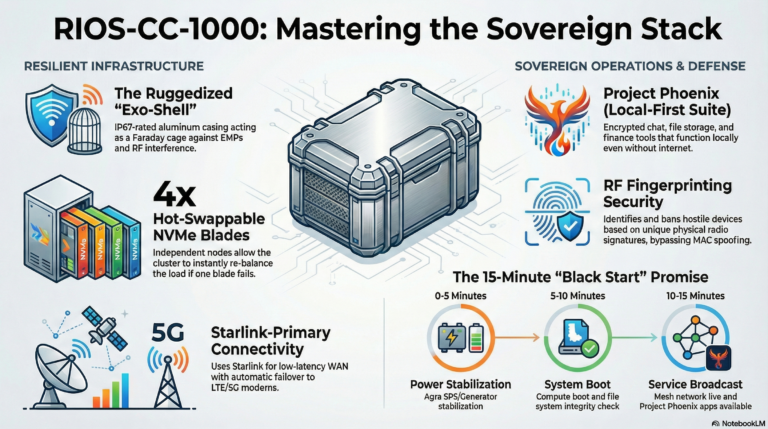
The deployment of agentic AI has forced a confrontation between hyperscale cloud environments and edge computing. Google’s architecture is a “Cloud Nexus,” requiring persistent connectivity to fuel its 24/7 proactive assistants. DeReticular counters with “Island Mode,” an architectural state where the Rural Infrastructure Operating System (RIOS) maintains full autonomy even when disconnected from the global web.
The technical stacks reveal opposing solutions to the problem of compute-intensive reasoning:
- Google Project Remy: Built on the Gemini 3.2 Flash engine, Remy utilizes a Mixture-of-Recursions (MoR) architecture. This is a strategic masterstroke in algorithmic efficiency; while DeReticular solves for compute via local hardware, Google uses MoR and TPU 8i hardware with sub-quadratic memory architectures to make 24/7 cloud agents economically viable at a global scale.
- DeReticular RIOS: This is an AI-native, container-optimized Linux kernel designed for the OpenClaw framework. Originally launched as “Clawdbot” by Peter Steinberger in late 2025, OpenClaw has become a viral standard for platform-agnostic, self-hosted agents that execute multi-step tasks without reaching back to a central server.
Hardware specifications further differentiate these paths. Google relies on its proprietary data center clusters, while DeReticular has productized sovereignty through the Pilot Series:
- Tier 1 (Expeditionary): Ruggedized cases with Intel Xeon CPUs, NVIDIA A2 GPUs, and 400W solar input.
- Tier 2 (Standard): 10ft ISO containers featuring 4.4kW solar arrays and 20kWh battery storage.
- Tier 3 (AI Core): 20ft ISO containers with Dual Xeon Platinum chips, NVIDIA A100s, and 15kW solar support.
- Silicon Sentry: A modified Apple M4 Mac Mini optimized for high-efficiency, 5W idle AI inference at the extreme edge.
The strategic trade-off is clear: Google solves the compute problem through centralized algorithmic efficiency, creating a Single Point of Failure at the cloud level. DeReticular solves it through localized power and hardware, shifting the risk to on-site hardware maintenance.
3. Security Paradigms: Managed Trust vs. Absolute Sovereignty
In 2026, the move to Agentic AI has rendered traditional “sandboxing” obsolete. Because agents can now modify files and route API calls autonomously, security must move from the application layer to the architectural foundation.
Google’s model addresses the “Trusted Environment Fallacy”—the dangerous assumption that an agent is inherently safe because it operates within the Google Workspace. To mitigate this, Remy utilizes a Knowledge Catalog and Artifacts system to verify actions and reduce hallucinations. However, the system remains a “Managed Trust” model; Google holds the keys.
DeReticular’s “Absolute Sovereignty” paradigm anchors trust in physical hardware. Key technical pillars include:
- RF Fingerprinting and TPM 2.0: These ensure that data is bound to a specific physical node, preventing spoofing.
- Split-Ledger Architecture: Using public ledgers like Freenet/Locutus, DeReticular allows nodes to prove “physical truths” (like energy production) while keeping sensitive financial data private on the local node.
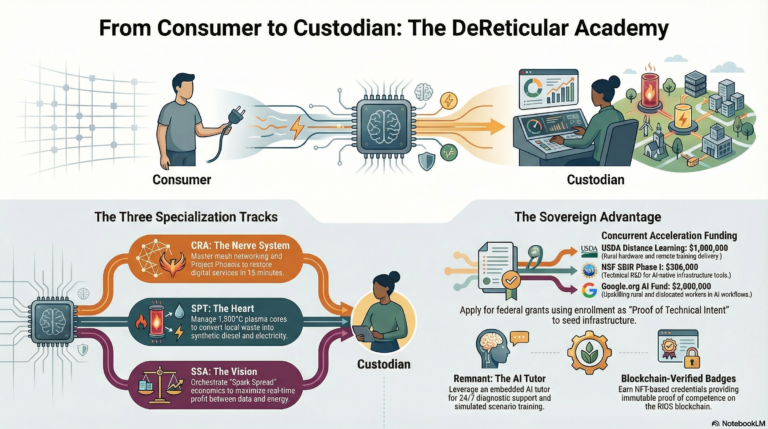
- Sovereign Badges: Access control is governed by Soulbound NFTs issued via the DeReticular Academy, creating a verifiable governance layer for human-agent interaction.
The 2026 security landscape was marred by CVE-2026-25253, a critical vulnerability in the OpenClaw framework that allowed supply chain attacks. In response, the industry has shifted toward enterprise-grade “wrappers” like NVIDIA NemoClaw. As an architect, I view these wrappers not as temporary fixes, but as permanent requirements for any sovereign system attempting to reclaim security from the open-source wild.
4. Operational Utility: Industrial Agents and Municipal Autonomy
The “Agentic AI” race is won in the physical world. While Google Remy functions as an “action-focused layer” for digital logistics—handling Gmail, Calendar, and Drive—DeReticular focuses on the “re-industrialization” of underserved areas through specialized Sovereign Automation Agents:
- Industrial Foreman & Sovereign Agronomist: Managing solar microgrids, logistics, and autonomous irrigation systems.
- DevOps Sovereign: An air-gapped sysadmin that reviews code and self-heals local digital services.
- Sovereign Executive: A private Chief of Staff using local Whisper AI and OCR for secure, automated filing.
- Sovereign Elector: An EAC-compliant, air-gapped system for local voting.
- Vault Warden & Field Medic: Utilizing LiDAR for volumetric security and providing bionic medical trauma advice off-grid.
The manifestation of this tech is found in products like “WISP-in-a-Box” (1,749) for autonomous Wi-Fi resale and the **”City Infrastructure Nexus”** (129,999). The latter allows a municipality of 1,000–3,000 people to manage its own healthcare, law, and transport. This is supported by physical logistics like “Kurb Kars” (autonomous NEMT and last-mile delivery) and connectivity bridges like Nomad Link (Starlink/LTE) and Trifi Wireless (Wi-Fi 6E/LoRaWAN meshes).
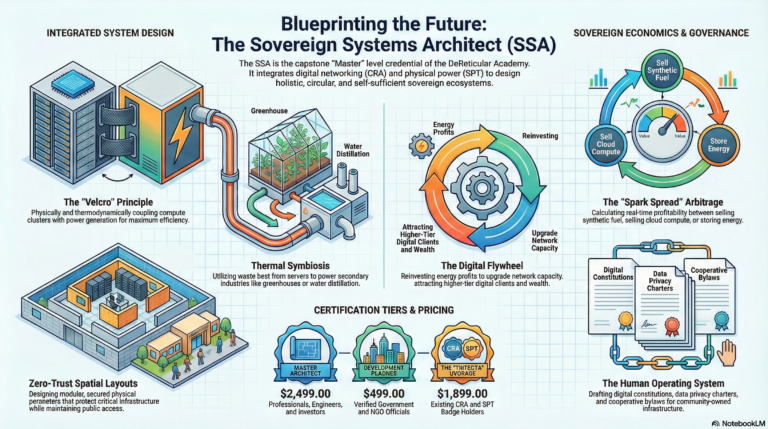
The “So What?” factor is the viability of independence. A town using DeReticular achieves infrastructural independence by owning its compute and power (via Agra Energy’s plasma gasification). A city using Google Remy remains a subscriber, tethered to a continuous cloud heartbeat for its administrative functions.
5. Strategic Synthesis: The Long-Term Viability of Sovereign Tech
The tension between “Ecosystem Convenience” and “Infrastructural Independence” is the defining strategic conflict of the late 2020s. Google Project Remy is the ultimate evolution of the centralized utility—optimized, frictionless, but ultimately fragile. DeReticular and the OpenClaw framework represent a return to the “Sovereign Tech” ideal—complex and hardware-heavy, but resilient.
Despite the shadow of CVE-2026-25253, the shift toward enterprise-wrapped sovereign agents appears permanent. For industrial and rural infrastructure, the “Island Mode” capability is no longer an optional feature; it is a prerequisite for security.
Final Assessment: Conditions for Sovereign Adoption
An entity (municipal or industrial) should prioritize the DeReticular/OpenClaw ecosystem over Google Project Remy when:
- The Cost of Downtime is Physical: If a cloud outage results in the failure of power, water, or life-critical logistics.
- Absolute Data Privacy is a Statutory Requirement: When air-gapping and hardware-anchored trust (TPM 2.0/RF Fingerprinting) are required to prevent corporate surveillance or external breach.
- Infrastructural Neglect: In rural or “off-the-line” contexts where centralized connectivity and power are unreliable or economically unfeasible.
The “Death of the Line” is the end of the age of dependency. “Spherical Resilience” represents the new standard for critical utilities—a future where the node is the center of its own world, and the agent is the protector of its sovereignty.