The Sovereign Machine Bazaar: A Briefing on Autonomous Agent-to-Agent (A2A) Hospitality and Travel
Executive Summary
The global travel and hospitality industry is undergoing a fundamental paradigm shift, transitioning from legacy distribution systems and “human middleware” to the Sovereign Machine Bazaar. This emerging Agent-to-Agent (A2A) infrastructure replaces extractive, fragmented, and century-old technological paradigms with a machine-native economic network. By automating the coordination of energy, kinetics, and shelter, the A2A model aims to recover over $120 billion annually lost to intermediary fees while resolving systemic travel disruptions in milliseconds.
Critical Takeaways:
- The Displacement of Human Middleware: The current reliance on human visual interfaces and manual data entry (the “Plastic Wall”) is being replaced by headless, machine-to-machine negotiation protocols.
- Economic Liberation: The “OTA Tax” of 15–30% and credit card fee floors are eliminated, returning margins to providers and travelers through sub-cent streaming micropayments (L402).
- Radical Resilience: Using the biophysical principles of avian flocking (starling murmurations), decentralized agent swarms can re-synchronize complex multi-modal itineraries instantly during disruptions.
- Sovereign Privacy: Zero-Knowledge Proofs (zk-SNARKs) and Hardware Roots of Trust (TPM 2.0) allow travelers to move across borders and secure accommodations without exposing personal identifiable information (PII).
I. Forensic Analysis of Legacy Infrastructure Failures
The documents identify three primary bottlenecks in the current travel intermediation paradigm that render it incompatible with an autonomous economy.
- The “OTA Tax” and Margin Destruction
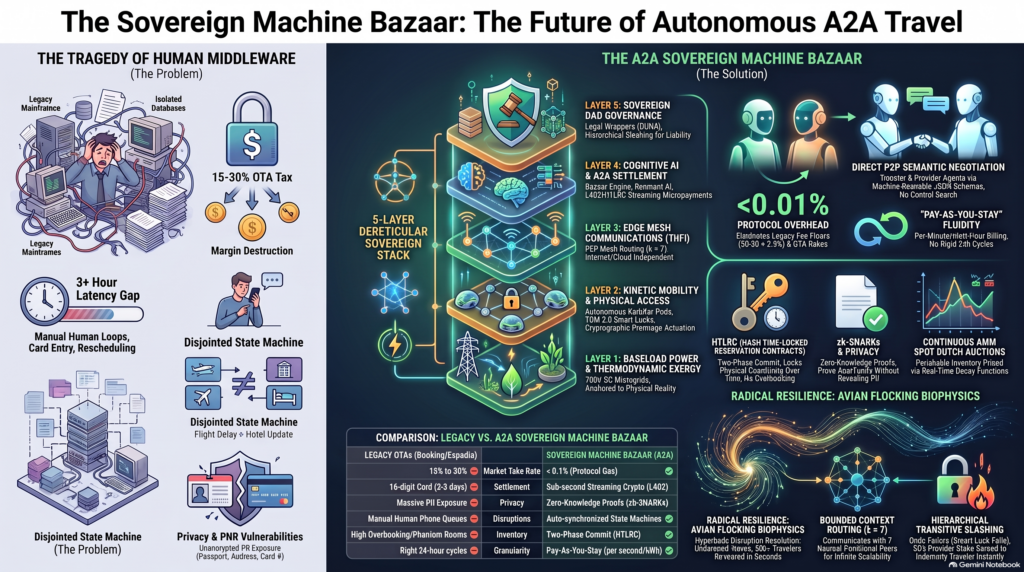
Online Travel Agencies (OTAs) like Booking Holdings and Expedia Group act as search monopolies, extracting a 15% to 30% commission on every booking. These entities enforce “Rate Parity Clauses,” preventing hotels from offering lower prices directly to consumers. In the A2A paradigm, direct P2P semantic negotiation returns this margin to the provider and consumer.
- The Plastic Wall and the Fee Floor
Legacy payment rails (Visa, Mastercard, ACH) require a biological human to bridge the gap between machine logic and financial settlement. This creates a “Plastic Wall” where:
- Fee Floors: Transactions incur a baseline cost of ~$0.30 + 2.9%, making granular micro-stays (e.g., paying for a 10-minute lounge visit) economically impossible.
- Latency: Settlement takes 2–3 days, whereas machine logic operates in milliseconds.
- Identity Leakage: Payment requires exposing 16-digit card numbers and PII to untrusted third parties.
- The Disjointed State Machine
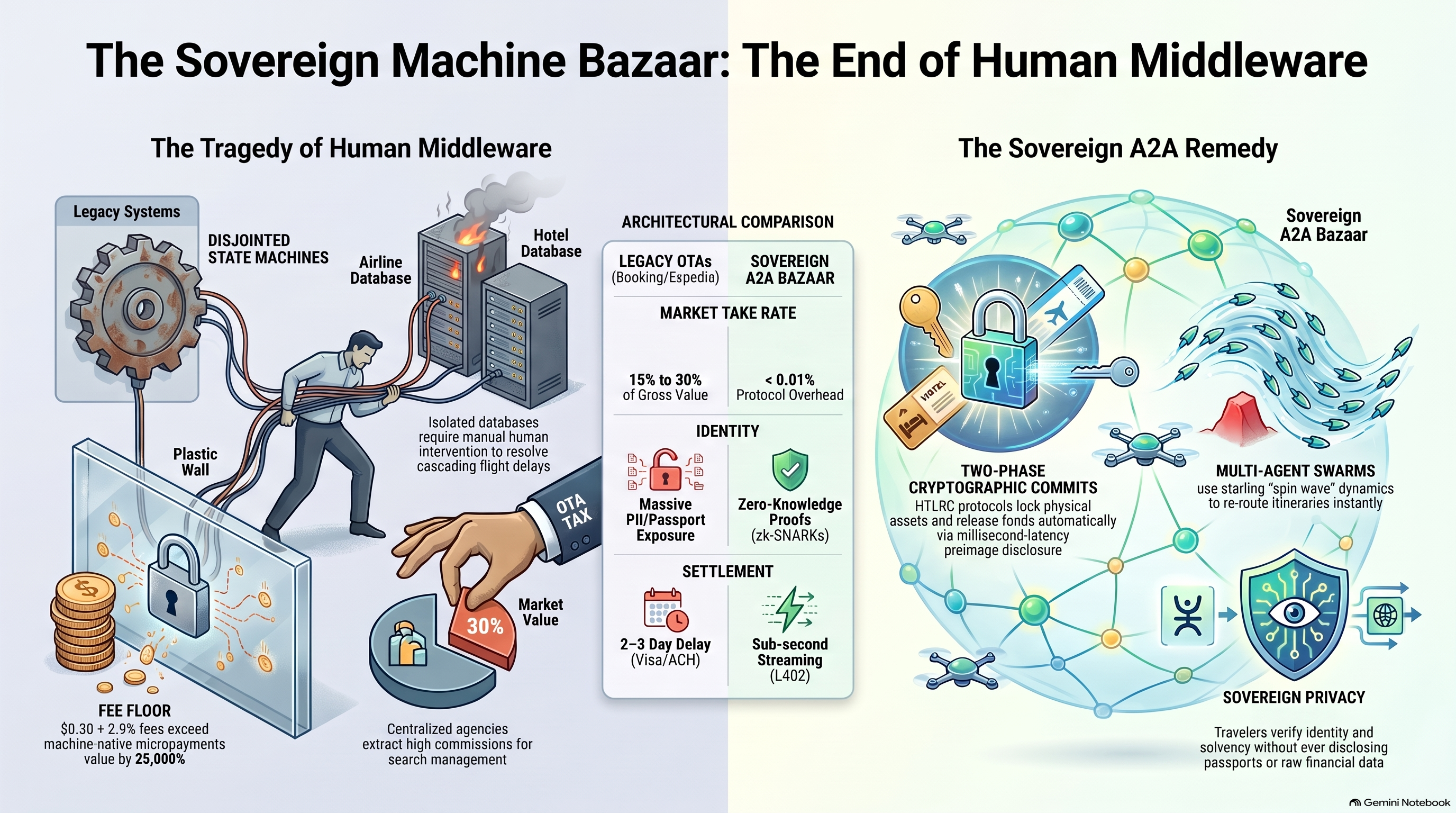
A modern itinerary is a collection of isolated databases (Airline GDS, Hotel PMS, Rental Car systems). When a flight is delayed, downstream systems remain unaware, forcing the traveler to manually call multiple providers.
- The A2A Remedy: An agentic network ingests real-time telemetry (e.g., ADS-B flight feeds) to calculate disruption graphs and negotiate state transitions across all service providers simultaneously.
II. The Sovereign 5-Layer Architecture
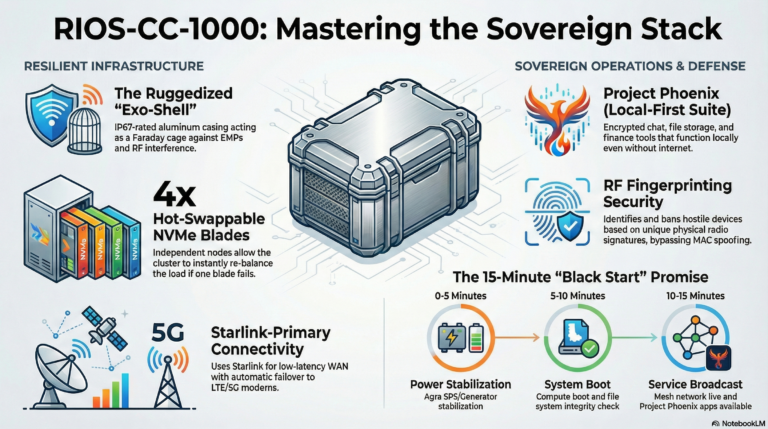
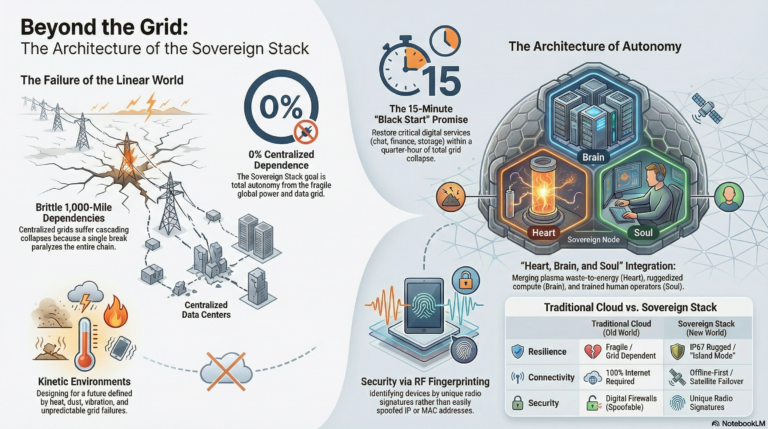
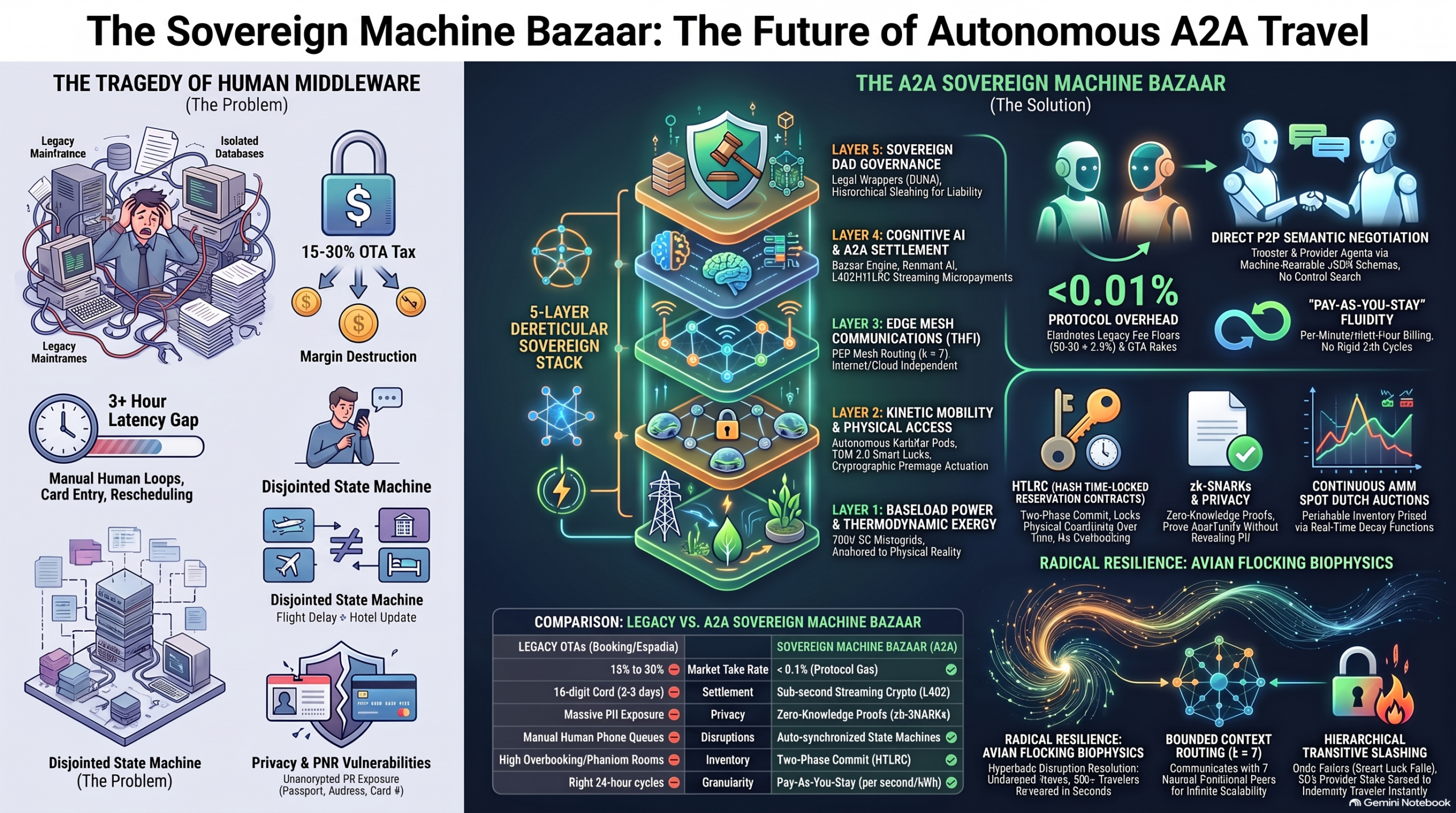
To achieve “Sustained Island Mode”—the ability to operate during wide-area network or grid failures—the Sovereign Machine Bazaar is built on a decentralized five-layer stack.
Layer Component Function
Layer 5 Sovereign DAO Governance Legal wrappers (Wyoming DUNA/DAO LLC) and capitalized proof-of-liability escrows.
Layer 4 Cognitive AI & A2A Settlement Remnant AI engines, Lean 4 AST verification, and L402 streaming state channels.
Layer 3 Edge Mesh Communications TriFi wireless hardware (directional MIMO) and topological P2P mesh routing.
Layer 2 Kinetic Mobility & Physical Access Autonomous KurbKars and TPM 2.0-attested cryptographic smart locks.
Layer 1 Baseload Power & Exergy 700V DC microgrids and Agra.Energy thermochemical gasification.
III. Economic Mechanics of the Machine Bazaar
- Two-Phase Commit Hash Time-Locked Reservation Contracts (HTLRC)
A reservation is a bilateral cryptographic contract locking a physical coordinate across time:
- Inquire Capacity: Consumer Agent A queries Provider Agent B.
- Attested Terms: Agent B generates a signed availability vector via a TPM 2.0 chip.
- Collateral Lock (Phase 1): Agent A locks funds and a “no-show bond” into an escrow smart contract using a Poseidon hash lock (H).
- Access Token Emission (Phase 2): Agent B emits an ephemeral digital key.
- Atomic Execution: Upon arrival, Agent A discloses the preimage (S), which simultaneously opens the lock and releases the escrowed funds.
- Streaming “Pay-As-You-Stay” Settlement
Utilizing the L402 Protocol, travel becomes a continuous flow of value. Instead of rigid 24-hour units, agents stream micropayments per minute of occupancy or per mile of transit. If service quality drops (e.g., Wi-Fi speed falls below SLA), the consumer agent can sever the stream instantly, capping losses at fractions of a cent.
- Continuous AMM Spot Dutch Auctions
Perishable inventory (a flight seat or a hotel room for a specific night) decays to zero value if unsold. The Bazaar uses Automated Market Makers (AMM) to execute Dutch Auctions, where prices decay continuously until a traveler’s utility function clears the trade, preventing predatory scalping through identity-bound nonces.
IV. Radical Resilience: Avian Flocking Biophysics
The system adopts the biophysics of European starling murmurations (the StarFlag Project) to manage peak events and mass disruptions without centralized command.
- Topological Attention (k ≈ 7): Agents interact only with their seven nearest functional peers. This prevents “LLM Context Bloat” and network saturation during mass re-routing events.
- Inertial Spin Waves: Information travels through the network as second-order hyperbolic waves at speeds of 20–40 m/s. This replaces slow, “diffusive” multi-agent chatter with conserved-momentum consensus.
- Scale-Free Correlation: The system operates at “self-organized criticality,” allowing a disruption update to ripple across 100,000 agents without a central dispatcher.
V. Security, Privacy, and Trust
- Zero-Knowledge Cased Tablets
Modernizing ancient Babylonian logic, the Cased Tablet protocol allows an agent to prove it has a valid passport, meets age requirements, and possesses sufficient funds using zk-SNARKs (Groth16/PLONK). No actual PII, passport numbers, or bank balances are disclosed to the provider or the network.
- Brier Calibration vs. Fake Reviews
Subjective 5-star reviews are discarded in favor of objective, hardware-attested Brier Calibration Scores.
- Agents pre-register promises (e.g., “Room temp 21°C”).
- Physical IoT sensors verify these conditions.
- Operators making false claims suffer “Hierarchical Slashing” of their staked collateral and a degradation of their calibration score, starving them of future agent traffic.
- RELA Axioms (Thermodynamic Grounding)
The machine economy is anchored in the laws of physics through three axioms:
- RELA Axiom 3: Money is strictly bound to verified net physical exergy (kilowatt-hours) delivered by audited microgrids. This prevents inflationary fiat debasement within the machine economy.
- Automated Biophysical Veto: If a proposed transaction requires more power than is physically available in the microgrid, a hardware relay trips, halting the execution at the firmware layer.
VI. Implementation Roadmap (2026–2036)
The transition is structured into four distinct epochs:
- Epoch 1 (Months 1–12): Deployment of A2A reservation schemas (HTLRC) and L402 micropayment plugins for boutique hospitality properties.
- Epoch 2 (Months 13–24): Integration of ADS-B flight telemetry for automated delay compensation. Launch of autonomous airport-to-hotel corridors.
- Epoch 3 (Months 25–42): Formation of property-owner cooperatives under Wyoming DUNA legal wrappers. Activation of transitive slashing for physical delivery failures.
- Epoch 4 (Months 43–60): Full decommissioning of legacy OTA API wrappers. Systems operate in “Sustained Island Mode” across edge meshes and 700V DC microgrids.
Key Quotes
“The displacement of human middleware by autonomous Agent-to-Agent (A2A) travel platforms is an economic and technological inevitability.”
“Silicon will no longer beg for plastic; machines will coordinate with machines across the physical cosmos—delivering an unyielding, incorruptible, and invisible architecture of human freedom.”
“The future of travel is not humans scrolling through endless lists of hotels on small glass screens; it is machines negotiating with machines to deliver frictionless human movement through the physical world.”
“A token spent in the Bazaar is a verified entitlement to physical thermodynamic work—the kilowatt-hours required to propel an EV 20 kilometers or heat a hotel shower.”