Technical Architecture: The “Trustless Identity” Layer
This report analyzes DeReticular’s integration of Hyphanet and the New Freenet (2023) into their “Trustless Identity” layer, followed by a SWOT and Gap Analysis.
1. Technical Architecture: The “Trustless Identity” Layer
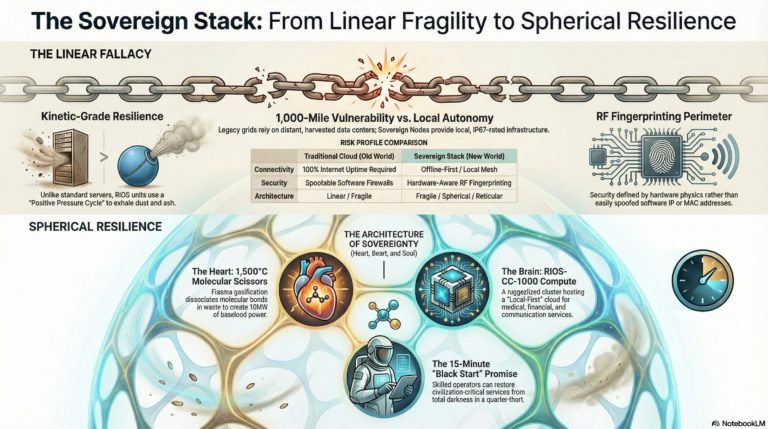
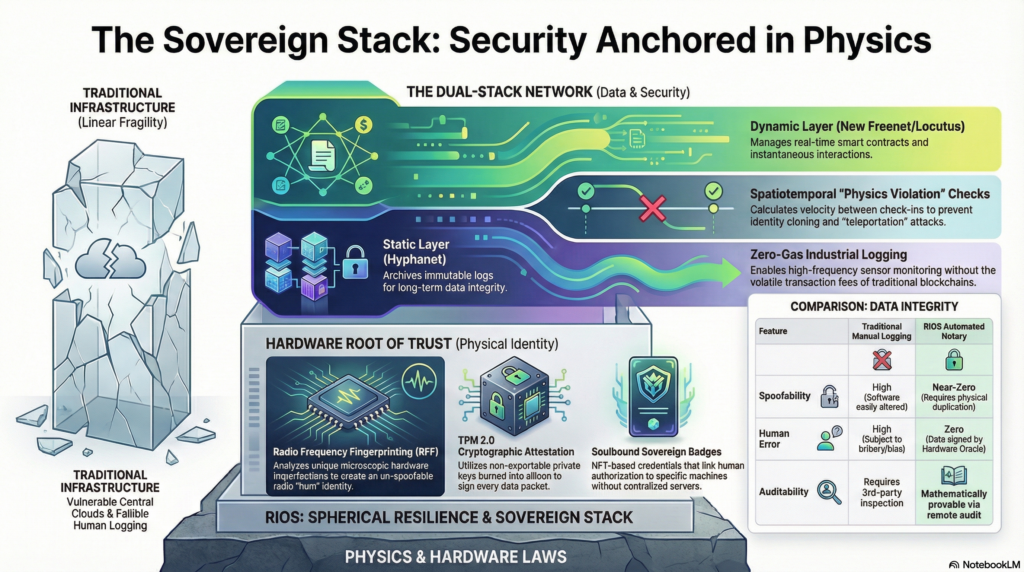
DeReticular’s RIOS (Rural Infrastructure Operating System) creates a “Physical Truth” layer by anchoring digital data to specific physical hardware.[1] This prevents “garbage in, garbage out” scenarios where corrupt data is entered into a blockchain.
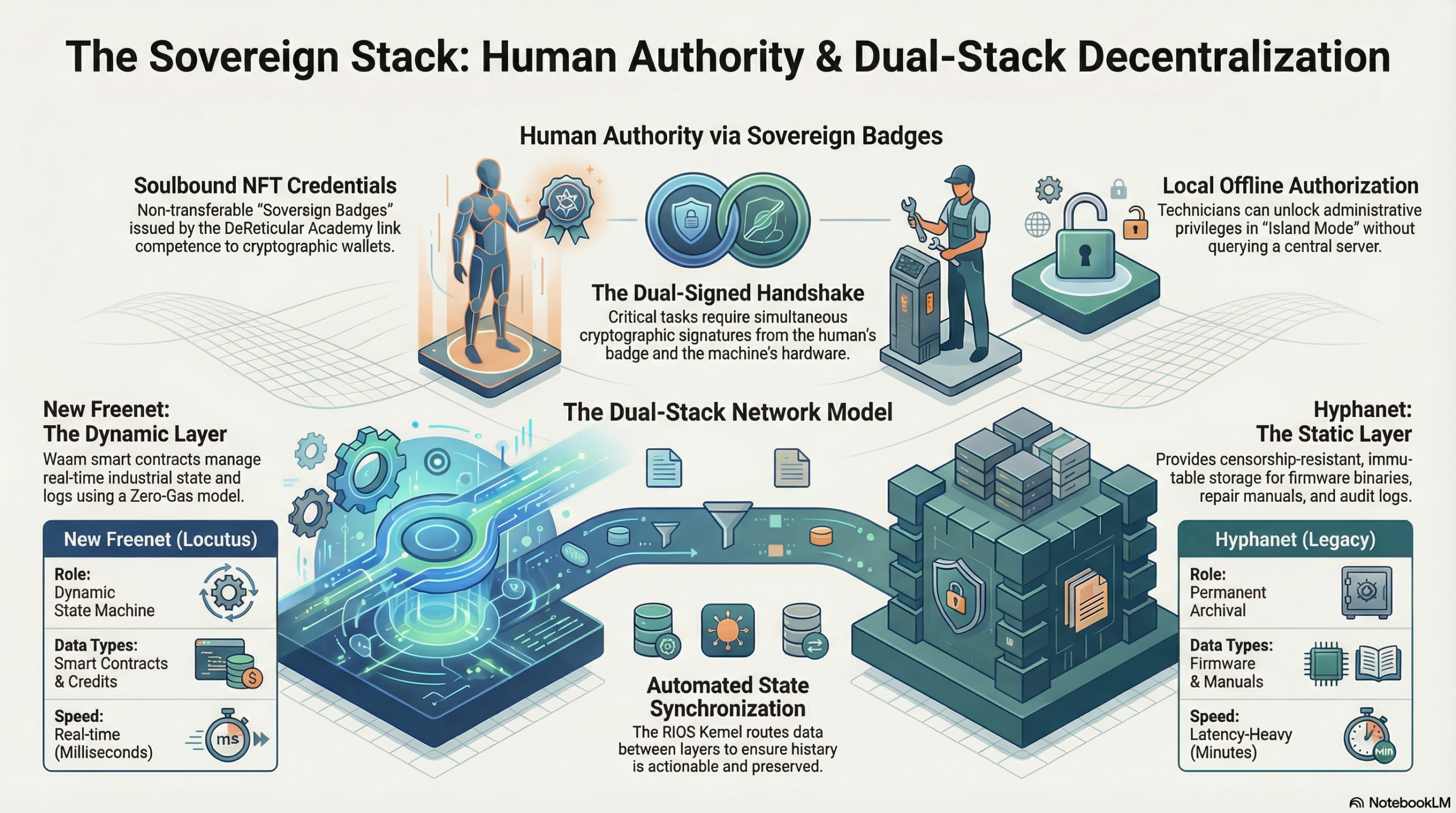
The architecture uses a “Dual-Stack” approach to leverage the strengths of both Freenet versions:
A. The Hardware Root of Trust (The Anchor)
Before data touches the network, it is authenticated locally:
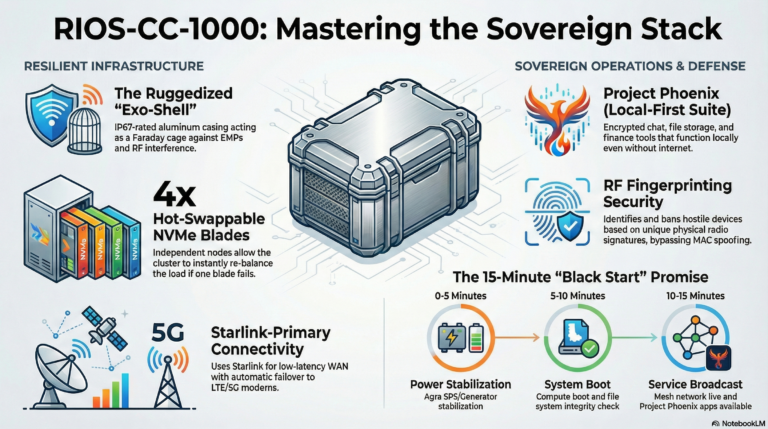
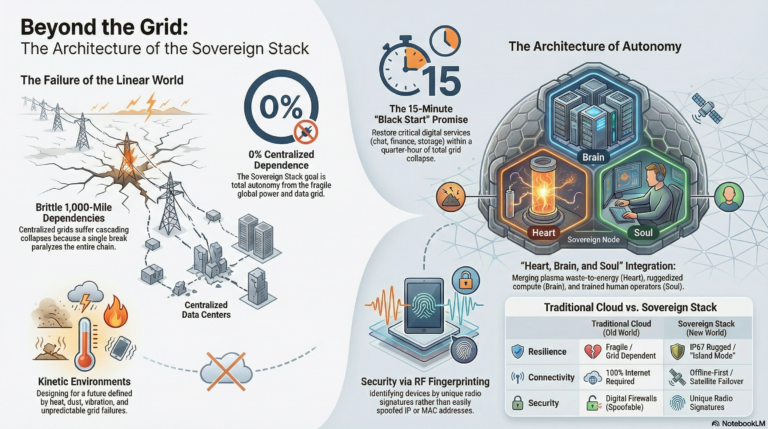
- Radio Frequency Fingerprinting (RFF): RIOS analyzes the unique, microscopic imperfections in the radio signals emitted by a device (e.g., a solar inverter or sensor). This creates an unforgeable “digital passport” that cannot be spoofed by software.[1]
- TPM 2.0 Attestation: The RIOS node uses a Trusted Platform Module (TPM) chip to cryptographically sign this data.[2][3] The private key is burned into the hardware and cannot be extracted.[3]
B. Hyphanet (Legacy Freenet): The “Static” Layer
- Role: Used for “Community Links” and censorship-resistant publishing.[2]
- Implementation: RIOS nodes run Hyphanet to host local, offline-capable “freesites” (e.g., medical wikis, repair manuals, uncensored news) accessible via Wi-Fi.
- Identity Function: Provides “Static Anonymity.” It protects the identity of the publisher (the node operator) while ensuring the data (e.g., a whistleblowing document or technical manual) remains permanently accessible and uncensorable.
C. New Freenet (Freenet 2023 / Locutus): The “Dynamic” Layer
- Role: Used for “Data Interoperability” and “Smart Contracts.”
- Implementation: RIOS uses New Freenet’s WebAssembly (Wasm) contracts to store dynamic industrial data.
- Identity Function:
- Zero-Gas Registry: Unlike Ethereum, Freenet allows RIOS to store high-fidelity data (images of crops, detailed logs) without transaction fees.
- Contract-Based Verification: A “HempGrade” contract, for example, automatically accepts data only if it is signed by a valid RIOS Hardware Oracle. The network itself rejects data that doesn’t match the cryptographic signature of the trusted hardware.
2. SWOT Analysis
| STRENGTHS (Internal) | WEAKNESSES (Internal) |
| Physical-Digital Bridge: Uniquely solves the “Oracle Problem” by using RF Fingerprinting to prove data originated from a specific physical machine, not a bot. | Reliance on Alpha Software: The “New Freenet” (2023) is explicitly experimental. Building critical industrial infrastructure on pre-beta software creates significant stability risks. |
| No “Gas” Fees: By using Freenet instead of a blockchain (like Ethereum/Solana), the system avoids volatile transaction costs, making high-volume industrial data logging economically viable. | High Technical Complexity: The stack requires expertise in RF engineering, rust programming, decentralized protocols, and hardware security. This creates a steep learning curve for adopters. |
| Offline Resilience: The architecture is designed for “Island Mode,” allowing nodes to function and verify identity locally even if the global internet is cut. | Hardware Dependency: The security model fails if the specific TPM or RFF hardware components are unavailable (supply chain issues) or compromised at the factory level. |
| OPPORTUNITIES (External) | THREATS (External) |
| Regulatory Compliance: Perfect fit for new laws like the EU Deforestation Regulation (EUDR), which demands “provenance” (proof of origin) for commodities.[3] | Regulatory Hostility: Governments may view “sovereign” encryption and darknet-adjacent tech (Freenet) as a threat to national security or financial oversight. |
| “Flood the Forge” Initiative: By opening the application layer to external developers (via CodeLaunch), they can rapidly expand the ecosystem beyond just infrastructure tools.[4] | Network Stagnation: If the New Freenet project fails to gain critical mass or is abandoned by open-source contributors, the RIOS “Dynamic Layer” would require a total rebuild. |
| DePIN Trend: The “Decentralized Physical Infrastructure Network” (DePIN) sector is booming. RIOS is positioned to be the “OS” for this entire market sector.[1] | RFF Spoofing Arms Race: As AI advances, “Deepfake” attacks against Radio Frequency Fingerprinting could emerge, requiring constant security updates. |
3. Gap Analysis
This analysis identifies the distance between DeReticular’s current capabilities and their strategic vision.
Gap 1: The Application Layer (The “Empty OS” Problem)
- Current State: DeReticular has built a powerful “backend” (RIOS + Hardware). They have the operating system and the server.
- Desired State: A thriving ecosystem of user-friendly apps (logistics, trading, communication) that non-technical farmers or factory managers can use.
- The Gap: Lack of Developer Adoption. An OS is useless without apps.
- Strategy to Close: This is the specific purpose of their “Flood the Forge” campaign—incentivizing founders to build the UI/UX layer on top of their tech.
Gap 2: Technology Maturity
- Current State: Relies on “New Freenet” (Alpha/Experimental) and “Radio Frequency Fingerprinting” (Academic/Research level).
- Desired State: “Civilization-in-a-Box” reliability (99.999% uptime) for critical infrastructure (power/water).
- The Gap: Stability vs. Innovation. The underlying protocols are still in active development and may change, potentially breaking backward compatibility for industrial nodes.
- Strategy to Close: Active contribution to the Freenet open-source code and likely maintaining a private, stabilized “fork” of the protocol for their industrial clients.
Gap 3: User Identity Management
- Current State: Identity is “Machine-First” (TPM/RFF). It verifies devices perfectly.
- Desired State: Seamless integration of Human identity (access control for staff, payment authorization).
- The Gap: Human-Machine Interface. How does a human user securely “log in” to a RIOS node without compromising the decentralized security model? (e.g., losing a private key means losing access to the power grid).
- Strategy to Close: Development of simplified “Key Management” systems or biometric bridges that link a human to the machine’s “Sovereign” identity.
Sources help
Google Search Suggestions
Display of Search Suggestions is required when using Grounding with Google Search. Learn more
- DeReticular RIOS Trustless Identity layer architecture
- DeReticular RIOS whitepaper decentralized identity Freenet
- project locutus freenet 2023 identity layer use cases
- DeReticular RIOS Hyphanet Freenet identity layer implementation
- DeReticular use of Freenet for industrial IoT identity
- DeReticular Radio Frequency Fingerprinting Freenet integration