Generation 5 Systems Architecture and the RIOS Mobile Initiative Study Guide
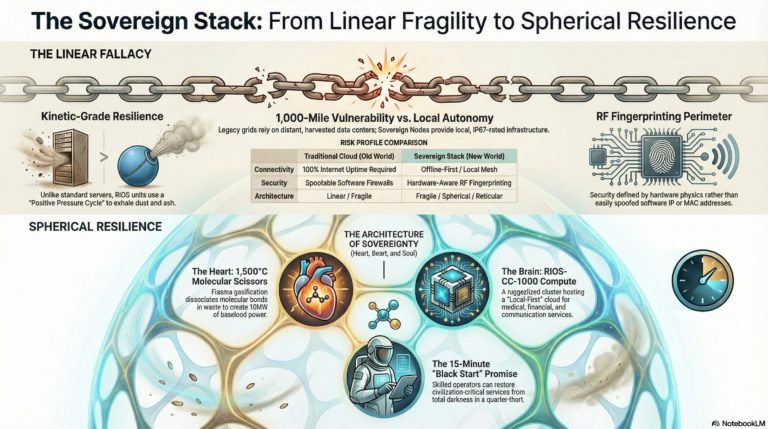
This study guide provides a comprehensive review of the Sovereign Stack Consortium’s transition to the Generation 5 (Gen 5) systems architecture and the strategic rollout of the RIOS Mobile Initiative. It covers technical specifications, manufacturing protocols, market strategies, and financial projections based on the provided corporate documentation.
Part 1: Short-Answer Review Quiz
Instructions: Answer the following questions in 2 to 3 sentences based on the provided source context.
- What is the primary strategic goal of the transition to the Generation 5 (Gen 5) product portfolio?
- How does the “Sovereign Factory” assembly protocol contribute to manufacturing efficiency?
- Describe the technical modification used to create “battery-free” operation in the WISP-in-a-Box series.
- What distinguishes the “Modern Nomad” target demographic in the RV market?
- What is the specific function of the pfSense routing layer in Gen 5 communication products?
- Explain the role of the Locutus Ledger in Product 3 (WISP-in-a-Box Agentic).
- What are the five stations of the Node 3 workshop production flow?
- How does InVentures Capital intend to mitigate supply chain risks for heavy sub-assemblies?
- Describe the “Unbreakable” demonstration used in the RIOS Mobile marketing strategy.
- How does the revenue model shift between Year 1 and Year 6 of the 10-year financial proforma?
Part 2: Answer Key
- Strategic Goal: The transition aims to consolidate disparate hardware and legacy software assets into six highly configurable, vertically integrated products. This shift simplifies pricing structures, improves manufacturing efficiency through standardized protocols, and enables programmatic autonomy via edge-AI integration.
- Sovereign Factory Efficiency: The protocol utilizes standardized, small-batch assembly processes across all digital and kinetic platforms. This allows the consortium to maintain high quality and consistency while transitioning from complex custom quotes to transparent, application-specific pricing tiers.
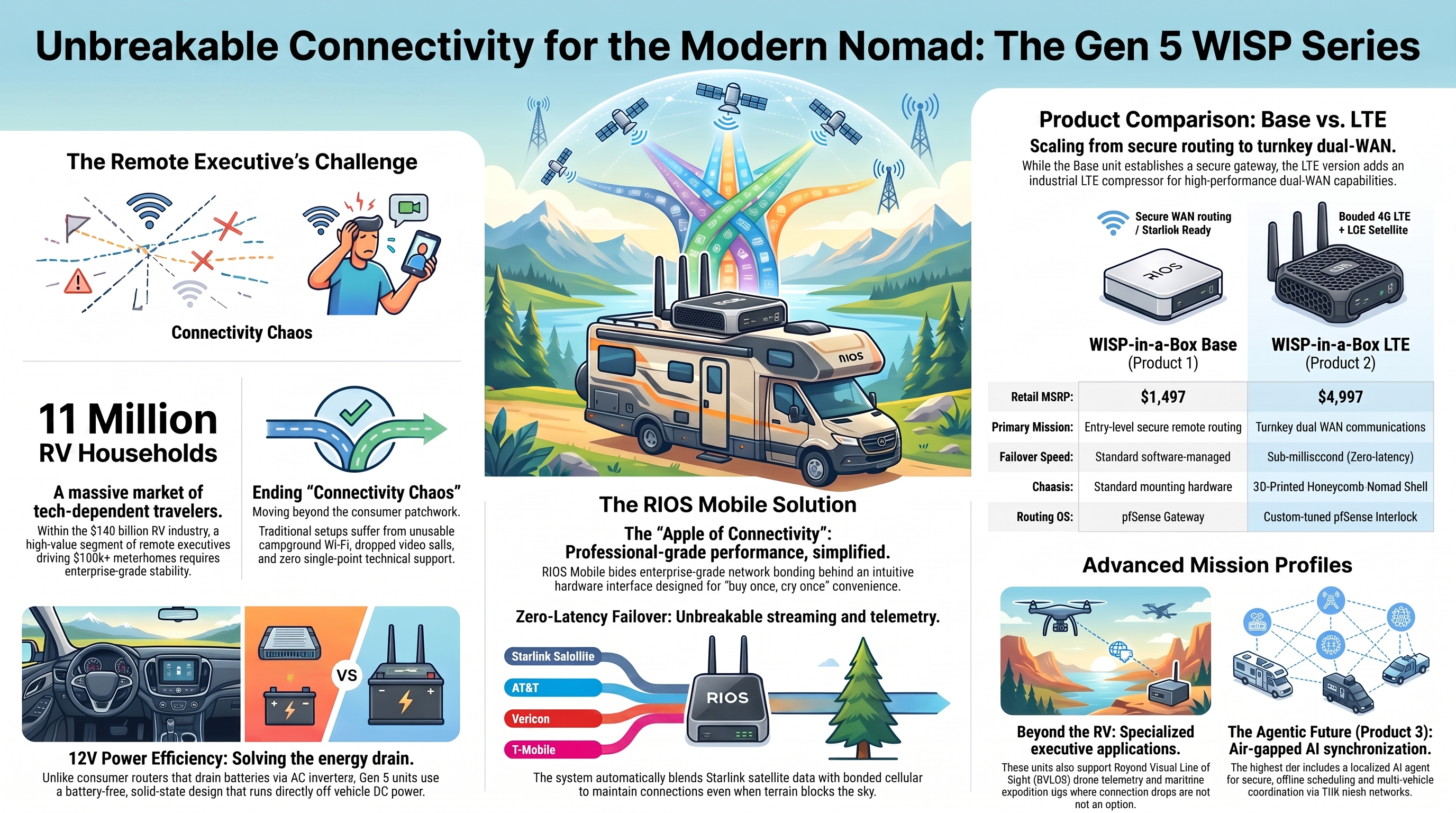
- Battery-Free Design: To bypass thermal limitations, technicians perform a “Battery Elimination Circuit” (BEC) modification where the internal battery is discarded and replaced by a DC-DC Buck Converter. A 10kΩ resistor is solder-bridged to the BSI pin to spoof the system, allowing the device to operate directly and safely off a vehicle’s DC power.
- Modern Nomad Demographic: This high-value segment consists of affluent remote executives and “road-schooling” families owning motorhomes valued at over $150,000. They are characterized by a “buy once, cry once” philosophy, prioritizing professional-grade, unbreakable connectivity for remote work and investments over cheaper, consumer-grade alternatives.
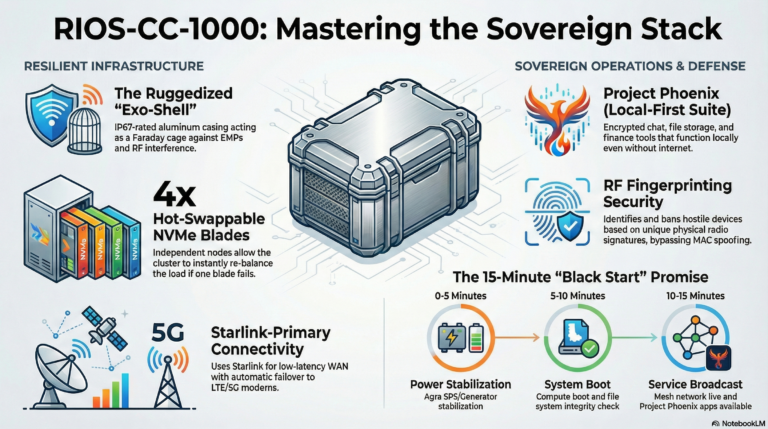
- pfSense Routing Function: The onboard pfSense layer serves as a secure local gateway that manages firewalls and VPNs without relying on external cloud authentication. It is specifically tuned to execute sub-millisecond, packet-level failover between satellite and cellular connections to prevent stream disruption.
- Locutus Ledger Role: In Product 3, the Locutus Ledger enables “Spherical Vehicle Synchronization” for multi-vehicle expeditions by allowing local AI agents to communicate peer-to-peer over mesh networks. This ensures all vehicles in a group remain synchronized and “on the same page” even in air-gapped or jammed environments.
- Node 3 Production Stations: The workflow follows a five-station sequence: Station A (Intake/Triage), Station B (3D Printing shells), Station C (BEC Soldering), Station D (Thermal and Smoke testing), and Station E (Kitting and Dispatch). This structured flow ensures each unit is ruggedized and verified before leaving the workshop.
- Supply Chain Mitigation: InVentures Capital utilizes strategic stockpiling of critical components like LFP cells and Wankel engine cores to shield production from delays. Additionally, they pursue DoD Title III Defense Production Act grants to fund domestic machine tooling and ensure BABA compliance for all sub-assemblies.
- Unbreakable Demo: This live sales tool involves physically covering a Starlink satellite dish during a 4K video stream to demonstrate the system’s sub-millisecond failover capabilities. The demonstration proves to potential customers that the transition to bonded cellular backup is instantaneous and results in zero lag.
- Revenue Model Shift: In the first three years, revenue is primarily driven by the physical sale of hardware kits like the Voyager and Sovereign Navigator. By Year 6, high-margin RIOS Pro software subscriptions become a significant contributor, increasing the aggregate gross margin to 65% as the installed user base compounds.
Part 3: Essay Questions
Instructions: These questions are designed for deeper analysis and synthesis of the source material. No answers are provided.
- The Evolution of Mobile Infrastructure: Analyze how the Gen 5 architecture addresses the “Connectivity Chaos” of the traditional RV market. Compare the “Consumer Patchwork” approach to the “Sovereign Node” philosophy in terms of power efficiency, hardware integration, and technical support.
- The Sovereign Factory and Small-Batch Production: Discuss the operational advantages of the Node 3 workshop’s five-station flow. How does this manufacturing model support the consortium’s goal of vertical integration while maintaining the flexibility to offer application-specific pre-configurations?
- Tactical-Consumer Crossover: Examine the integration of defense-grade technologies—such as Ogre Skin armor, air-gapped AI agents, and Wankel rotary engines—into consumer products like the Pawnee Dune Buggy and TAV. What does this suggest about the consortium’s market positioning and the demands of the “Modern Nomad”?
- Financial Strategy and Vertical Scaling: Evaluate the 10-year growth strategy for RIOS Mobile. Detail the progression from direct-to-consumer influencer seeding to OEM factory-installation agreements and eventual diversification into the marine and emergency services sectors.
- Technical Resilience in Extreme Environments: Detail the hardware and software interlocks (such as the BEC, Nomad Shell, and pfSense failover) that allow the WISP-in-a-Box series to function in high-heat or high-vibration mission profiles where consumer-grade equipment fails.
Part 4: Glossary of Key Terms
Term Definition
BABA Compliance “Build America, Buy America” standards ensured through domestic tooling grants and supply chain management.
BEC (Battery Elimination Circuit) A hardware modification that replaces internal chemical batteries with a DC-DC Buck Converter for direct vehicle power.
BVLOS “Beyond Visual Line of Sight”; a flight profile for drones requiring highly reliable, low-latency telemetry.
Cellular Compressor A modified cellular bonding bridge that utilizes solid-state design to provide high-speed remote connectivity.
Gen 5 (Generation 5) The current systems architecture of the Sovereign Stack Consortium, focusing on modular hardware and unified edge-AI computing.
Hybrid Fusion The process of seamlessly blending Starlink satellite data with multi-carrier cellular bonding for an “unbreakable” connection.
LFP Battery Lithium Iron Phosphate battery bank used for high-density, off-grid energy storage in Pawnee vehicles and hubs.
Locutus Ledger A decentralized synchronization tool used for machine-to-machine (M2M) communication and peer-to-peer data consistency.
Modern Nomad An affluent demographic of remote professionals who live or work from high-value motorhomes and require enterprise-grade connectivity.
Nomad Shell A custom, 3D-printed, honeycomb-ventilated enclosure designed for thermal management and physical durability.
Ogre Skin A lightweight, high-durability polymer-composite armor used to protect vehicle drivetrains and passenger enclaves.
pfSense An open-source firewall and routing software used in Gen 5 products to manage sub-millisecond WAN failover.
RIOS (Rural Infrastructure Operating System) The overarching enterprise-grade operating system repackaged for mobile and consumer use.
RNDIS Remote Network Driver Interface Specification; used for USB-C tethering between gateways and flight controllers or PCs.
Sovereign Factory A manufacturing protocol focused on small-batch, standardized assembly of digital and kinetic platforms.
TAV (Tactical Advanced-Power Vehicle) A flagship, custom-built armored vehicle featuring full technical stack integration.
vSIM Virtual SIM technology used to provide primary cellular coverage across multiple carriers and countries.
Wankel Engine A high-power-density, liquid-cooled rotary engine used as a range extender or standalone generator (APU).
WISP-in-a-Box A series of modular, ruggedized communications engines (Wireless Internet Service Providers) designed for remote and mobile use.